
Chinchilla Food: The Complete Guide to What Chinchillas Eat (2026)
Feeding your chinchilla correctly is one of the most important things you can do as an owner. Get it right, and you’ll have a healthy, energetic companion who can live 15 years or more. Get it wrong, and you risk serious digestive illness, dental disease, and obesity. This comprehensive guide to chinchilla food covers everything you need to know — from the daily diet staples of hay and pellets, to safe treats, foods to avoid, vitamins, water, and the latest feeding recommendations from vets and exotic pet specialists.
Understanding Chinchilla Nutrition: The Basics
Chinchillas are strict herbivores — they eat only plant-based food and should never be given meat, dairy, or animal products of any kind. In the wild, they survive on a high-fiber, low-fat diet of grasses, leaves, bark, twigs, and dried vegetation found in the rocky, high-altitude terrain of the South American Andes.
Their digestive systems are built around this sparse, fibrous diet, which means they are extremely sensitive to foods that are rich in fat, sugar, or moisture. Their teeth also grow continuously throughout their lives, making constant access to tough, fibrous food essential — not just for digestion, but to keep teeth worn down to a healthy length. Without adequate roughage, chinchillas can develop painful dental disease.
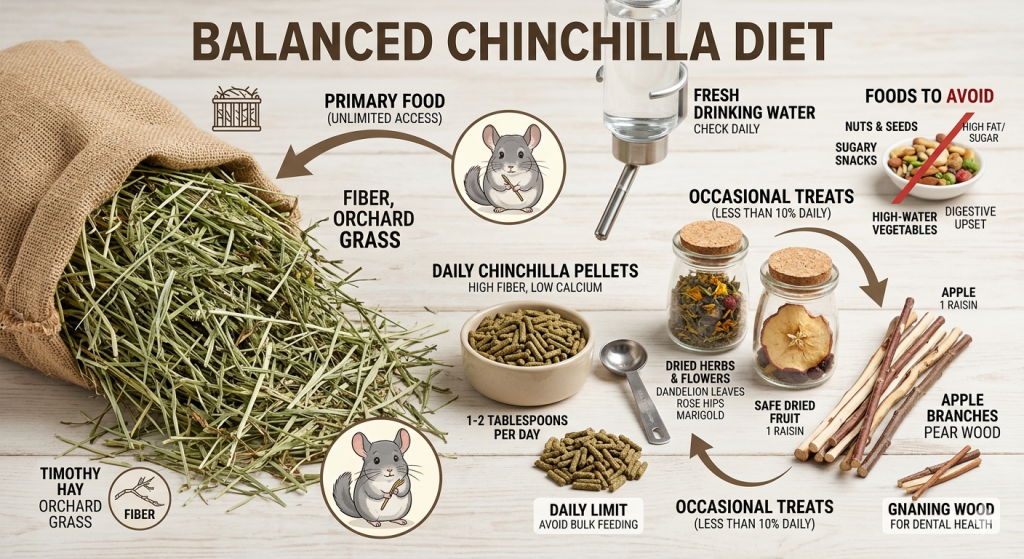
The ideal chinchilla diet is built on three pillars:
- Unlimited hay — the foundation, making up 75–85% of total intake
- A small daily serving of quality pellets — supplementary nutrients
- Occasional treats only — limited to well under 10% of the diet
1. Hay: The Most Important Part of a Chinchilla’s Diet
If you remember only one thing from this guide, make it this: hay is the cornerstone of chinchilla nutrition. It should be available 24 hours a day, seven days a week, in unlimited quantities.
Chinchillas require a high-fiber diet and should be offered low-calcium grass hay — such as Timothy hay, orchard grass, botanical hay, oat hay, or meadow hay — free choice 24 hours a day as the main component of their diet.
Hay serves two critical purposes. First, it keeps the digestive system moving — chinchillas must have food constantly passing through their gut. If the gut slows or stops (a condition called GI stasis), it can be life-threatening. Second, the act of chewing long-strand hay wears down those continuously growing teeth, preventing the painful dental conditions that are among the most common health problems in pet chinchillas.
Best Hay Types for Chinchillas
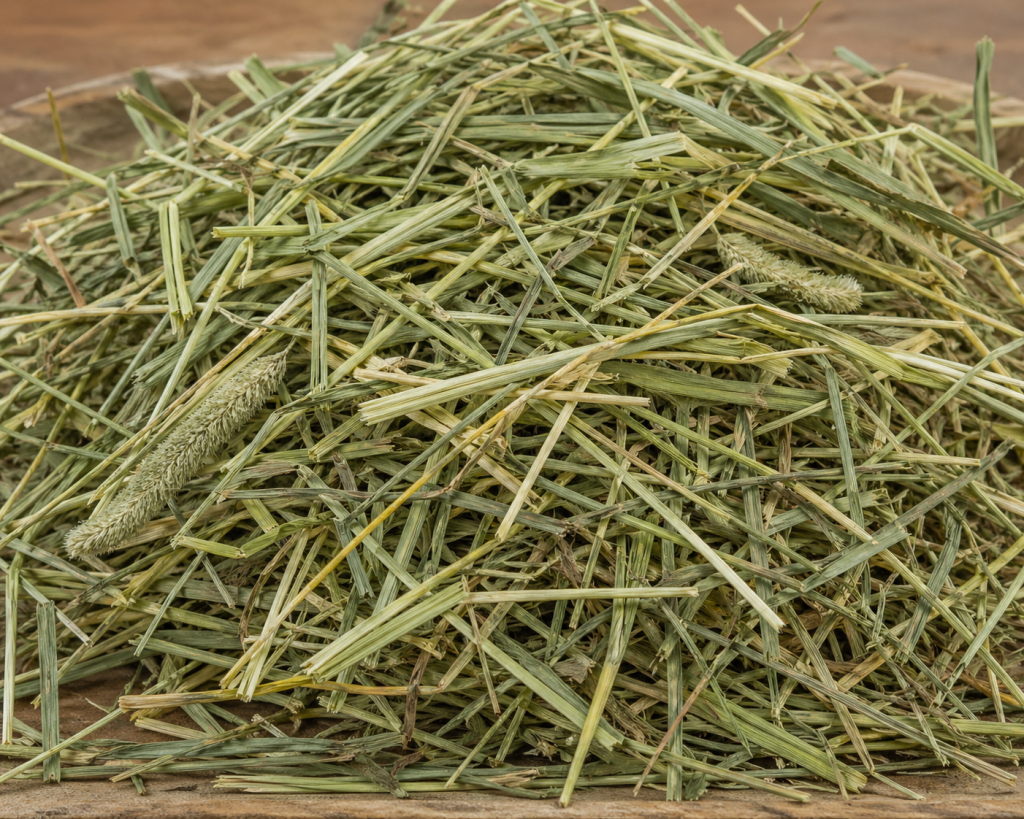
Timothy hay is widely regarded as the gold standard for adult chinchillas. It is low in calcium, high in fiber, and available from most pet stores and specialist small animal suppliers.
Other excellent options include:
- Orchard grass — sweet-smelling and often very popular with chins
- Meadow hay — a varied mix that provides enrichment through different textures
- Botanical hay — includes herbs and wildflowers for added interest
- Oat hay — fibrous and good for dental wear
- Bermuda grass — widely used and nutritious
What About Alfalfa Hay?
Alfalfa was once commonly recommended for chinchillas, but current veterinary guidance is more cautious. Alfalfa hay is not suitable for adult chinchillas, as it contains too much calcium and protein — it should only be fed to chinchillas under 6 months of age, or to females that have given birth. For adult chinchillas, excess calcium from alfalfa can lead to kidney problems and calcium bladder stones over time.
Hay Cubes
Some owners prefer hay cubes — compressed blocks of hay — as an alternative to loose hay. The benefits are convenience and less mess. The downside is that some chinchillas refuse to eat them, and they don’t provide quite the same natural foraging experience as loose hay. If you use hay cubes, break them into smaller pieces to encourage eating.
Tips for Serving Hay
- Use a metal hay rack mounted to the cage wall to keep hay off the floor and away from waste
- Replace hay daily — never leave damp, soiled, or moldy hay in the cage
- When buying from a feed store, make sure it smells fresh and shows no sign of mold or mustiness
- Store hay in a cool, dry place in a breathable container — not an airtight bag
2. Chinchilla Pellets: A Vital Supplement
Pellets form the second component of a well-balanced chinchilla diet. They provide concentrated vitamins, minerals, and protein that hay alone cannot supply — but they should supplement hay, not replace it.
How Much to Feed
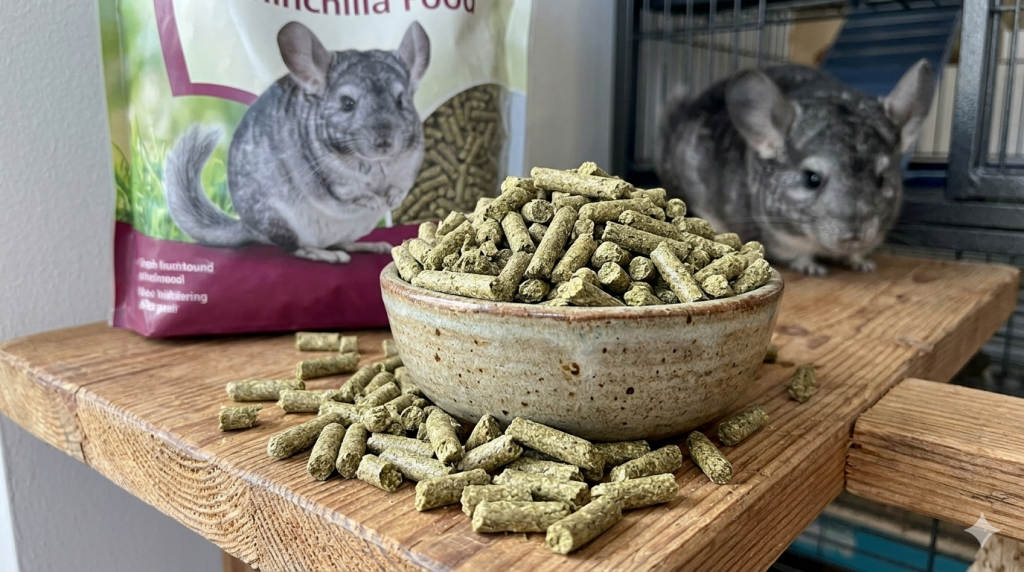
Chinchillas can be fed a small amount — 1–2 tablespoons per day — of a commercial pelleted diet formulated specifically for chinchillas. This is consistent across most current veterinary guidance. Some owners split this into two small servings — one in the morning and one in the evening — to mirror the chinchilla’s natural crepuscular feeding pattern.
What to Look for in a Quality Pellet
Not all chinchilla pellets are equal. When choosing, look for:
- 18% protein content (approximately)
- Low fat — ideally between 2–5%
- High fiber — 15–35% is a good target
- No added sugars, artificial colours, or synthetic preservatives
- No mixed treats (seeds, nuts, corn, or colourful pieces) blended into the pellet — these encourage selective feeding where chins pick out the sugary bits and ignore the nutritious pellet
A quality pellet is low in fat (2–5%) and high in fiber (15–35%), without artificial colors or preservatives. Many commercial pellets contain added sugar, which can cause blood pressure spikes, diabetes, obesity, and serious health issues.
Freshness Matters
Always check the milling or expiration date on the bag. Many feeds found in pet stores have a two-year shelf life — do not buy pellets if there is less than a year remaining on the date. It is also not advisable to buy pellets from bulk bins, as light destroys nutrients, and there is no way of knowing the age or whether the pellets have been contaminated. Aim to buy only what your chin will consume within one month. The longer pellets sit, the more their nutritional value degrades.
Can You Use Guinea Pig or Rabbit Pellets?
In a pinch, guinea pig pellets are an acceptable temporary substitute. Rabbit pellets made with timothy hay are a secondary option. However, neither has been formulated for chinchilla-specific nutritional needs, and chinchilla pellets are also shaped differently — longer and easier for chinchillas to hold in their paws (they eat much like squirrels, sitting on their haunches). For best results, always use pellets made specifically for chinchillas.
Switching Pellet Brands
Never switch pellets abruptly. A sudden change disrupts the delicate balance of bacteria in the chinchilla’s gut and can cause diarrhea or sticky stools. Instead, mix old and new pellets together over a two-week period, gradually increasing the proportion of new pellets until the transition is complete.
3. The Chinchilla Digestive System: Caecotrophy Explained
One aspect of chinchilla nutrition that surprises many new owners is caecotrophy — the process by which chinchillas eat certain of their own droppings. This is completely normal, healthy behaviour that is shared by rabbits and guinea pigs.
Chinchillas can’t get enough nutrition from fiber the first time it passes through their gut. So they excrete soft, sticky-type droppings called caecotrophs, then re-eat them for vital nutrition. Digestible fiber is moved up into an organ called the caecum, where good bacteria ferment the fiber and make it easy to digest. Indigestible fiber is moved through and excreted as separate, round, hard droppings.
If you notice your chinchilla eating soft droppings directly from its bottom, do not be alarmed — this is a sign of a healthy, well-functioning digestive system.
4. Treats: What’s Safe, What’s Not, and How Much
Chinchillas love treats and will beg enthusiastically for them. Raisins in particular are famously irresistible to most chins. However, their sensitive digestive systems cannot handle the fat and sugar in many treats — and overfeeding even “safe” treats causes real harm.
The golden rule: all treats combined should add up to no more than 1 teaspoon per day, and many experts recommend treats only 2–3 times per week rather than daily.
Safe Treats in Moderation
- Raisins — one small raisin, 2–3 times per week maximum. They are very high in sugar (around 70% sugar) but remain a well-established favourite
- Dried rose hips — one of the best chinchilla treats; high in fiber and vitamin C, can be offered daily in tiny amounts
- Dried apple, banana chips, papaya, or cranberry (no sulfite preservatives) — one small piece, 2–3 times per week
- Dried herbs — dandelion root or leaves, rosemary, hibiscus, parsley, and blackberry or strawberry leaves are safe in small amounts several times per week
- Dried wildflower forage — mimics what wild chinchillas would eat; excellent enrichment
- A small piece of fresh apple, carrot, or celery — very occasionally
- Plain shredded wheat or a plain oat ring — one piece on occasion
- Apple wood sticks and chew twigs — not food exactly, but loved as treats and excellent for dental health
Treats to Avoid Completely
Corn should never be fed to chinchillas, as it is toxic — it is also prone to mold and can cause fatal bloat. Chocolate is dangerous due to its high fat and sugar content, and causes damage to the digestive and nervous systems. Dairy products can cause a fatal upset in the digestive system. Nuts and seeds are incredibly high in fat, protein, and oils, and can lead to calcium deficiency and possibly liver damage.
Also avoid:
- Yogurt drops — despite being marketed as chinchilla treats, these are high in sugar and promote harmful gut bacteria
- Citrus fruits (lemons, oranges, grapefruit) — too acidic
- Avocado — contains persin, which is toxic to chinchillas
- Bananas — too high in sugar and moisture
- Grapes — some evidence suggests even small amounts can cause kidney failure
- Watermelon and high-water-content fruits — cause diarrhoea
- Seed sticks and commercial “treat bars” — almost always loaded with fat and sugar
5. What Chinchillas Should Never Eat
Beyond treats, there are entire food categories that are genuinely dangerous for chinchillas. The following should never be given under any circumstances:
| Category | Examples | Risk |
|---|---|---|
| Allium vegetables | Onions, garlic, leeks, chives | Red blood cell damage, anaemia |
| High-gas vegetables | Broccoli, cabbage, cauliflower, peas | Bloating, GI distress |
| High-calcium greens | Spinach, Swiss chard, beet greens | Bladder stones |
| Toxic vegetables | Rhubarb, avocado, asparagus, corn | Organ damage, fatal bloat |
| Processed carbs | Bread, pasta, crackers | Digestive upset, obesity |
| Dairy | Milk, cheese, yogurt | Fatal gut bacterial imbalance |
| Meat/animal products | Any | Not digestible; causes illness |
| Chocolate | Any form | Theobromine toxicity; heart problems |
| Caffeine | Coffee, tea, energy drinks | Seizures, tremors |
| Nuts (all varieties) | Almonds, walnuts, cashews, peanuts | Liver damage, GI stasis, obesity |
Foods that are poisonous to chinchillas include asparagus, avocado, cabbage, corn, lettuce, broccoli, rhubarb, rhubarb leaves, and peas. Other dangerous foods include bananas, sunflower seeds, and peanuts. This list is not exhaustive — when in doubt, avoid it.
6. Safe Greens and Vegetables (With Caution)
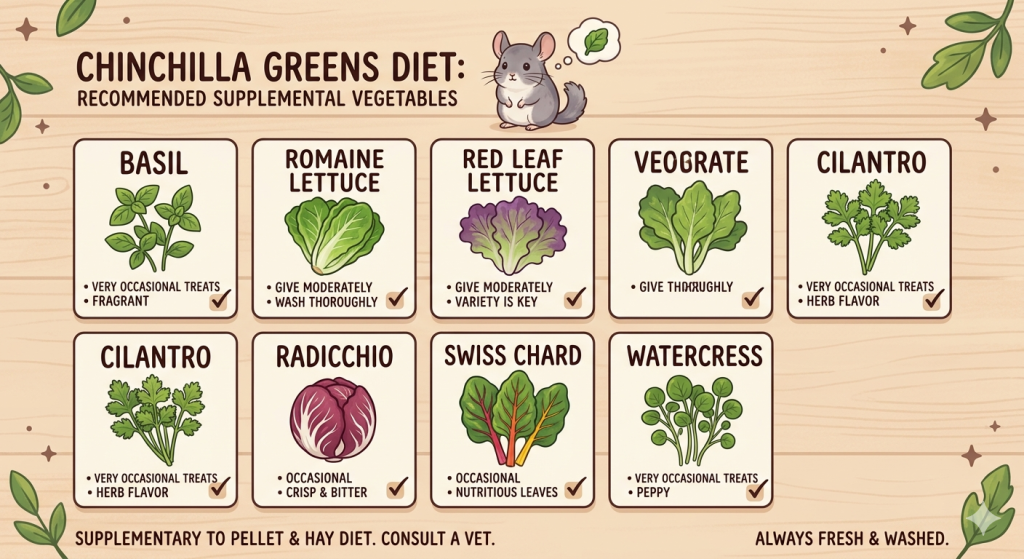
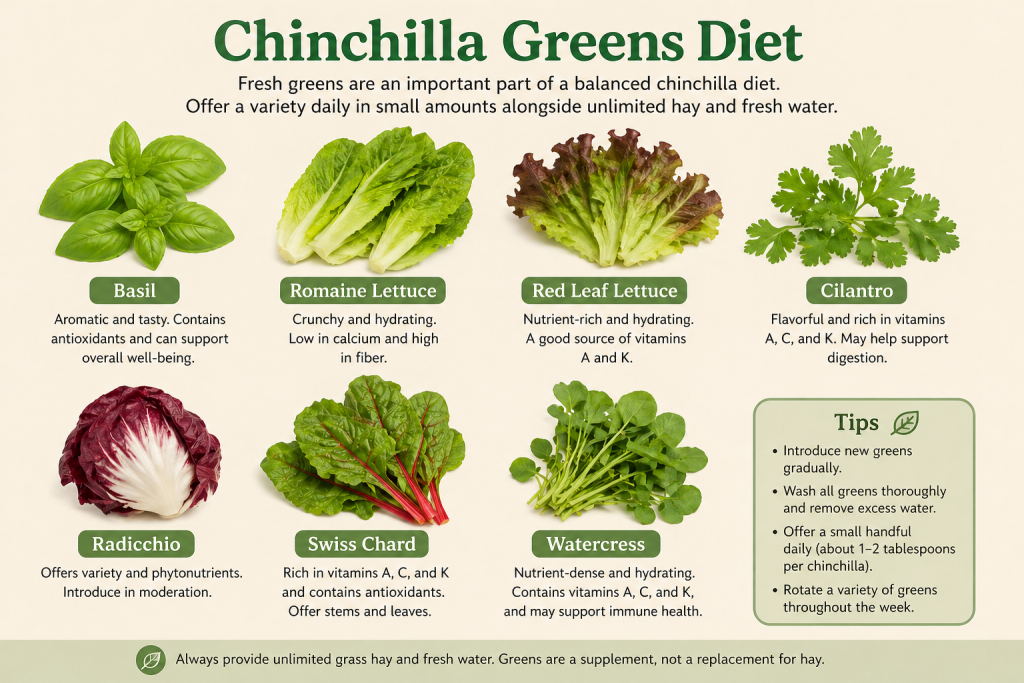
Some fresh greens can be included in a chinchilla’s diet, but this is an area where expert opinions vary and caution is essential. If you choose to offer greens, introduce them extremely slowly — a tiny amount of one new vegetable at a time — and monitor for any sign of soft stools or digestive upset.
Some greens to consider include basil, romaine lettuce, red leaf lettuce, cilantro, radicchio, Swiss chard, and watercress. Produce and treats together should not exceed 10% of a chinchilla’s daily diet.
According to VCA Animal Hospitals, dehydrated fruits and vegetables can cause severe digestive disturbance if fed to chinchillas — always offer fresh if you do offer vegetables, and only in very small amounts. Many exotic vets advise skipping fresh vegetables altogether unless under veterinary guidance, as the risk of digestive upset is significant for this species.
7. Vitamins and Supplements: Do Chinchillas Need Them?
Chinchillas do not require additional vitamins if fed a complete and balanced diet. A fresh, quality chinchilla pellet together with unlimited hay covers the full spectrum of nutritional needs for a healthy adult chinchilla.
The exceptions are:
- Chinchillas that are ill or recovering from illness
- Pregnant or nursing females
- Young chinchillas under 6 months
- Chinchillas on restricted diets under veterinary supervision
If you’re considering adding a vitamin supplement, consult your exotic vet first. Too many vitamins — particularly fat-soluble ones like A, D, E, and K — can accumulate to toxic levels and cause serious harm.
What About Salt Licks?
Salt licks (compressed salt and mineral wheels) are sometimes offered by breeders as a supplement. Opinion is divided: some breeders feel they support electrolyte balance, while others argue that a quality pelleted diet already supplies all the salt and minerals a chinchilla needs. Providing one in the cage is unlikely to cause harm, but is not considered essential by most modern veterinary guidance.
8. Water: Fresh, Clean, and Always Available
Water is not optional — it is a critical, life-sustaining component of a chinchilla’s diet. Fresh, clean water must always be available. Most owners choose to offer water through a sipper bottle hung inside the cage, as water bowls are easily soiled and spilled. Depending on the quality of your tap water, you might wish to consider bottled water.
The bowl or bottle should be cleaned daily and scrubbed with dish soap. It’s especially important to use a small scrub brush in the sipper spout to prevent bacterial overgrowth on the inside. Algae and bacteria can accumulate surprisingly fast in water containers, particularly in warmer weather, and a contaminated water source is a direct route to illness.
Chinchillas don’t drink large amounts of water compared to some other small pets, but they should always have a full, clean supply available. Monitor the water level daily and replenish as needed. If you notice your chinchilla drinking noticeably more or less than usual, consult your vet — changes in water intake can indicate illness.
9. Feeding Schedule: When and How to Feed
Chinchillas are naturally crepuscular — most active at dawn and dusk — and in the wild feed primarily in the early morning and late evening. Aligning your feeding routine with this pattern is ideal.
A practical daily schedule looks like this:
- Hay: Always available, unlimited. Replenish and replace soiled hay daily.
- Pellets: 1–2 tablespoons, ideally split into a morning and evening serving.
- Water: Always available. Change and clean the bottle daily.
- Treats: No more than 2–3 times per week, in amounts totalling no more than 1 teaspoon.
Remove any uneaten fresh food or treats within a few hours to prevent spoilage and bacterial growth.
10. Feeding Chinchillas at Different Life Stages
Baby Chinchillas (Under 6 Months)
Baby chinchillas (kits) nurse from their mother for the first few weeks. Their digestive systems are even more sensitive than adults. Once weaning begins, they can have alfalfa hay (which provides the extra calcium and protein needed for growth), plus specially formulated junior pellets. Treats should be avoided entirely until adulthood.
Pregnant and Nursing Females
Growing, pregnant, and nursing chinchillas may be fed a larger number of pellets or unlimited amounts to provide additional calories, protein, fat, and calcium. They should also be fed large handfuls of alfalfa hay during these stages. Consult your vet about whether additional supplementation is appropriate.
Senior Chinchillas
Older chinchillas may have reduced appetite and dental issues that make chewing harder. If your senior chin is losing weight, discuss dietary options with an exotic vet — softer hay, soaked pellets, or other adjustments may be recommended.
11. Diet-Related Health Problems to Watch For
A poor diet is the root cause of many of the most common chinchilla health problems. Being aware of these can help you catch issues early.
Dental disease (malocclusion): When chinchillas are not offered enough hay and only consume pellets, their top and bottom teeth can collide. This causes tooth impaction — once this occurs, there is nothing that can be done other than to provide pain medication and soft foods. Prevention through unlimited hay is essential.
Obesity: Overfeeding pellets and treats is a leading cause of obesity in pet chinchillas. Signs include lethargy, reduced activity, and visible weight around the midsection. Obesity leads to liver problems, reduced lifespan, and reduced quality of life.
Diarrhoea / soft stools: Usually caused by too many treats, too many fresh greens, a sudden diet change, or stress. If soft stools persist for more than 24 hours, see a vet.
Bladder stones: Linked to excess calcium from too much alfalfa hay or high-calcium vegetables. Stick to low-calcium grass hays like timothy for adult chinchillas.
GI stasis: The gut slowing or stopping — a potentially fatal condition. Usually triggered by insufficient hay, stress, or illness. Signs include no droppings, hunching, and loss of appetite. This is a veterinary emergency.
Chinchilla Food: Quick Reference Summary
| Food | Recommendation |
|---|---|
| Timothy / orchard grass hay | Unlimited, 24/7 — the most important food |
| Chinchilla pellets | 1–2 tbsp per day |
| Raisins | 1 small raisin, 2–3 times per week |
| Dried rose hips | Daily in tiny amounts — excellent treat |
| Dried herbs (dandelion, rosemary, parsley) | Several times per week, small amounts |
| Fresh apple, carrot, celery | Very occasionally, tiny piece |
| Alfalfa hay | Adults: rarely or never. Kits/pregnant: yes |
| Nuts and seeds | Never |
| Chocolate, dairy, avocado, corn | Never — toxic |
| Onions, garlic | Never — toxic |
| Fresh water | Always available, changed daily |
Frequently Asked Questions About Chinchilla Food
How often should I feed my chinchilla? Hay is available 24/7. Pellets should be offered once or twice daily (morning and evening). Treats no more than 2–3 times per week.
Can chinchillas eat fruit every day? No. Fruit is high in sugar and should be an occasional treat only. A tiny piece 2–3 times per week is the upper limit. Never offer citrus, grapes, or high-water-content fruits like watermelon.
My chinchilla only eats the pellets and ignores the hay. What should I do? This is a common problem and a health concern. Try reducing the pellet quantity so your chin is hungrier for hay, offer a variety of hay types to find one they prefer, and make sure the hay is fresh. Hay must make up the majority of the diet — pellets alone do not provide enough fiber for dental or digestive health.
Can I give my chinchilla vegetables? With care. Only a small selection of leafy greens are considered safe, and all should be introduced very gradually in tiny amounts. Many exotic vets advise avoiding fresh vegetables altogether due to the risk of digestive upset. When in doubt, leave it out.
Do chinchillas need vitamin supplements? Not if they’re eating a fresh, balanced diet of quality hay and pellets. Adding vitamins without veterinary guidance can actually cause harm through toxicity.
How do I know if my chinchilla is eating enough? A healthy chinchilla should be eating daily and producing plenty of round, firm droppings. Weight should be stable. If you notice changes in eating habits, reduced droppings, or weight loss, consult an exotic vet promptly.
Final Thoughts
Chinchilla food doesn’t need to be complicated — but it does need to be intentional. The foundation of a healthy chinchilla diet is simple: unlimited quality hay, a small daily serving of fresh chinchilla-specific pellets, and only very occasional treats in tiny amounts. Everything else is detail.
The biggest mistakes most chinchilla owners make are overfeeding treats, underestimating how much hay matters, and buying pellets that are too old or too low in quality. Get these three things right, and you’ll go a long way toward giving your chinchilla a long, healthy, and happy life.
For further reading and authoritative guidance on chinchilla nutrition, consult: