

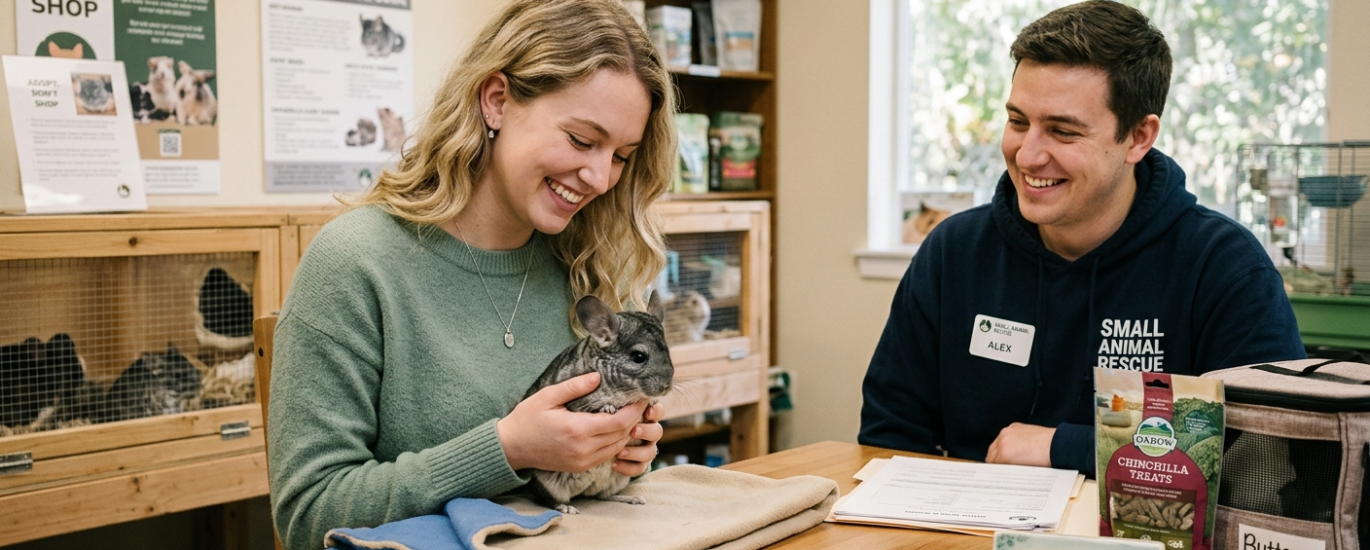
Chinchilla Adoption: The Complete Guide to Rescuing, Choosing & Bringing Home Your Chinchilla (2025)
Chinchilla Adoption | Rescue Chinchillas | How to Adopt a Chinchilla
Thinking about chinchilla adoption? You’re in the right place. This comprehensive guide covers everything you need to know — from finding a reputable rescue group to bringing your new chinchilla home safely — plus country-specific adoption procedures for the USA, UK, Canada, Germany, Poland, Russia, Japan, France, Netherlands, and Italy.
Table of Contents
- Why Choose Chinchilla Adoption?
- Where to Find a Chinchilla for Adoption
- Buying from a Breeder vs. Adoption
- Pet Shop Chinchillas: What You Need to Know
- What to Look for When Adopting a Chinchilla
- The First Few Days at Home
- Chinchilla Adoption by Country: Step-by-Step Guides
- Frequently Asked Questions
1. Why Choose Chinchilla Adoption? {#why-adopt}
Chinchilla adoption is one of the most rewarding decisions a prospective pet owner can make. Across the world, rescue organizations are overflowing with chinchillas surrendered by owners who underestimated the commitment involved. These animals aren’t unwanted because something is wrong with them — in the vast majority of cases, previous owners simply didn’t realize that chinchillas can live 15 to 20 years and require dedicated, specialist care.
When you adopt a chinchilla rather than purchasing one, you accomplish several things at once: you give a loving home to an animal that genuinely needs one, you free up space in an overstretched rescue facility, and you avoid supporting the commercial breeding industry — some of which operates under substandard welfare conditions. A 2024 federal probe in the United States uncovered a chinchilla breeding factory in Ohio that housed animals in filthy, overcrowded conditions. Adoption sidesteps this entirely.
The post-pandemic landscape has made chinchilla adoption more urgent than ever. Rescue organizations across North America and Europe report a surge in surrendered chinchillas — animals acquired on impulse during lockdowns when owners wanted companionship, only to find that a chinchilla’s nocturnal habits, dust-bathing routines, and need for cool temperatures (below 70°F / 21°C) don’t suit every household. Adopting a chinchilla today means potentially saving a life.
2. Where to Find a Chinchilla for Adoption {#where-to-find}
Dedicated Chinchilla Rescue Groups
Chinchilla-specific rescue organizations are your best starting point. Unlike general animal shelters, these groups have specialist knowledge of chinchilla behavior, diet, and health. Rescuers typically quarantine new arrivals for at least 30 days, conduct health checks, assess temperament, and socialize the animals before making them available for adoption.
To find a rescue group near you, start with a search engine query such as “chinchilla rescue [your city or region].” You can also search platforms like Petfinder or Adopt-a-Pet for chinchillas listed by rescue organizations in your area.
The Global Chinchilla Alliance (GCA) maintains a comprehensive directory of 501(c)(3) registered chinchilla rescues in the United States and provides logistical support for large-scale rescue efforts, connecting prospective adopters with specialist groups worldwide.
General Animal Shelters and Humane Societies
Chinchillas appear in general shelters far less often than cats and dogs, but it does happen. Contact your local humane society or animal control facility and ask them to notify you if a chinchilla comes in. Many shelters now also post animals on digital platforms, making it easy to set up alerts.
Rabbit Rescue Groups
This is a frequently overlooked route. Many rabbit rescue organizations also take in surrendered chinchillas, since the care requirements overlap in several ways. Rabbit rescues are more numerous and geographically widespread than chinchilla-specific groups, so if no dedicated chinchilla rescue exists in your area, this is a practical alternative.
Online Adoption Platforms
Websites such as Petfinder.com and AdoptAPet.com aggregate listings from shelters and rescue groups across the United States and Canada, allowing you to search by species, age, and location. In the UK, the Blue Cross and RSPCA post small animals available for rehoming through their websites. Always verify that the listing organization is a registered charity or recognized rescue before proceeding.
3. Buying from a Breeder vs. Chinchilla Adoption {#breeder-vs-adoption}
If no rescue chinchillas are available in your area, purchasing from a responsible breeder is the next best option — but understanding the difference between breeder types is critical.
Pet Breeders
Pet breeders raise chinchillas specifically to be companions. A responsible pet breeder will handle young chinchillas from birth, ensuring they are well-socialized, comfortable around humans, and accustomed to being picked up. They will also screen buyers carefully, be transparent about the animals’ health history, and often offer to take a chinchilla back if circumstances change. This kind of return policy is a hallmark of ethical breeding.
When evaluating a breeder, ask:
- How many chinchillas do they currently house?
- How long have they been breeding?
- What do they feed their chinchillas, and how often are the animals handled?
- Have there been any recurring health issues in their breeding line?
- Will they accept the chinchilla back if you can no longer care for it?
A reputable breeder will welcome you to visit their facility so you can see the living conditions firsthand. Never purchase from a breeder who refuses a visit or is reluctant to answer questions about ancestry or health history.
Show Breeders
Show breeders prioritize coat quality and color for exhibition purposes. Their chinchillas are typically handled less than those from pet breeders, which can mean they are less socialized. However, with patience and consistent interaction, even an adult chinchilla from a show background can become a wonderfully tame companion.
Finding a Breeder
Search online for chinchilla breeders in your region — many maintain websites or social media profiles. Contact an exotic animal veterinarian in your area, as they often know reputable local breeders. If no breeders are within driving distance, some will ship chinchillas by air in appropriate carriers; you will be responsible for the shipping fee.
4. Pet Shop Chinchillas: What You Need to Know {#pet-shops}
Many people first encounter chinchillas in a pet shop setting, and while purchasing from a pet store is possible, it carries the most uncertainty about the animal’s background and early socialization.
If you do consider a pet shop, inspect the environment carefully. The enclosures should be clean and free of strong ammonia odor. Chinchillas should not be housed more than one to a small cage. Any sign of illness in one animal in the group is a red flag for all the animals nearby. Insist on a written health guarantee that allows you to return the chinchilla if it becomes ill within a specified period after purchase, and take your new chinchilla to an exotic animal veterinarian immediately for a baseline health check.
5. What to Look for When Adopting a Chinchilla {#what-to-look-for}
Age
Chinchillas live 15–20 years, which means even an adult rescue animal will be your companion for a long time. If you want maximum time with your pet, ask the rescue or seller for the animal’s exact age. One firm rule: never adopt a chinchilla under four months of age. Although chinchilla kits are born fully furred and appear like miniature adults, they are not ready to be separated from their mother before this point. Unscrupulous or uninformed sellers sometimes try to move kits too early — always confirm age before committing.
Adult chinchillas tend to be slightly calmer and less frenetic than younger ones, which can actually make them easier to bond with for first-time owners.
Health
Before finalizing any chinchilla adoption, conduct a thorough visual health assessment:
- Ears and nose: Should be clean and free of discharge or debris.
- Fur: A healthy chinchilla’s coat is dense, soft, and plush. Matted or patchy fur indicates a problem.
- Under the tail: Check for any sign of diarrhea. Also inspect the cage floor — fecal pellets should be firm and round, not soft or irregular.
- Eyes: Bright, clear, and alert. A dull, half-closed eye is a sign of illness.
- Teeth: This is critical and often overlooked. The two top teeth must visibly overlap the two lower teeth. If they don’t, the chinchilla likely has malocclusion — a genetic condition where the teeth grow misaligned, fail to wear properly, and can eventually curve back into the mouth, causing chronic pain, infection, and jaw problems. Malocclusion requires regular veterinary tooth-trimming and is a significant, lifelong expense. Walk away from any chinchilla showing misaligned teeth.
- Activity level: A healthy chinchilla that has been allowed to wake up fully should be curious, responsive, and active. Sluggishness that persists after the animal has had time to rouse is a warning sign. Note that chinchillas are crepuscular — most active at dawn and dusk — so a sleepy midday attitude is normal. If the animal never becomes alert, something is wrong.
- Surroundings: Check whether other chinchillas in the same facility look healthy. A sick neighbor is a risk factor for your prospective pet.
Temperament
Look for a chinchilla that recovers quickly from being startled — one that dives for cover, then pops its head back out to investigate you with curiosity. This responsiveness indicates a well-adjusted animal that will likely bond well with a patient owner.
A chinchilla that races monotonously around its cage may be bored, understimulated, or suffering from compulsive behavior — consider this carefully before adopting. Extremely fearful chinchillas can often be won over with quiet, consistent attention, though some individuals will always remain shy regardless of effort.
Gender
Gender selection matters, particularly if you plan to house more than one chinchilla:
- Two males (especially brothers or father-son pairs) typically coexist very well. Unlike rabbits, male chinchillas rarely fight.
- Two females can take a long time to accept each other, and dominant individuals may never fully get along.
- A male and female together will produce offspring. Unless you are an experienced breeder, this should be avoided entirely. The pet chinchilla population is already under strain from a surplus of surrendered animals.
To determine sex, examine the genitalia beneath the tail. In females, the genital opening sits very close to the anus. In males, a notable gap of skin separates the two. Males over three months of age will also have visible testicles.
Return Policy
Always ask about a return or surrender policy before completing a chinchilla adoption — from both rescue groups and private breeders. Life is unpredictable. Illness, housing changes, or incompatibility with an existing pet (including another chinchilla) may mean you need to return the animal. A responsible source will have a clear policy in place.
6. The First Few Days at Home {#first-days}
The day your newly adopted chinchilla arrives home will be exciting — but it will almost certainly be frightening for the animal. Everything is unfamiliar: the smells, the sounds, the people, the cage. Chinchillas are prey animals with strong instincts to avoid predators, and a new environment will amplify every anxious impulse.
The kindest thing you can do is leave your chinchilla alone. Equip the cage with food, fresh water, hay, a hiding box, and a wheel, then step back. Resist the urge to handle the animal for the first few days. Let it explore its space and become familiar with your voice by sitting quietly near the cage and speaking in low, calm tones.
After 24–48 hours, most chinchillas begin to emerge from hiding and show the first signs of curiosity. This is your opening to slowly build trust.
Children in the household should be taught from the start that the chinchilla needs quiet time. Explain that the animal is frightened, and most children — even young ones — will understand and comply. Friends should not be invited to see the new pet for at least the first couple of days, and large groups of children should be avoided until the chinchilla is fully settled. Chinchilla bones are fragile; a dropped, squirming animal can suffer a broken limb. Young children should not handle chinchillas unsupervised, ever.
Other pets — particularly dogs — should be kept well away initially. Even a well-meaning dog investigating a cage with nose and paws will terrify a chinchilla. Introduce other animals to the chinchilla only gradually, once the chin is relaxed in its environment, and always under close supervision.
7. Chinchilla Adoption by Country: Step-by-Step Guides {#by-country}
🇺🇸 United States
Chinchilla adoption in the USA is well-supported by a nationwide network of specialist rescues. The Global Chinchilla Alliance and Petfinder are the two best starting points.
Step-by-step process:
- Search online. Use Petfinder.com, AdoptAPet.com, or search “chinchilla rescue [your state]” to find organizations near you. Notable rescues include Forever Feisty Chinchilla Rescue (New England), Whimsy’s Menagerie (Virginia), NWI Chinchilla Rescue (Indiana), and My Hopes In You Small Animal Rescue (New York).
- Submit an adoption application. Most US rescues require a written application covering housing conditions, cage size, diet plans, and veterinary access. Applications are typically processed within 24–48 hours.
- Provide a cage photo. Many rescues require a photo of your prepared enclosure to verify it meets minimum size requirements (typically at least 4 feet wide and 3 feet tall for one chinchilla).
- Pay the adoption fee. Fees vary by organization and typically range from $50 to $150 per animal. This helps offset the cost of veterinary care during the quarantine period.
- Visit and meet your chinchilla. Once approved, you’ll be invited to visit and meet available animals matched to your situation.
- Sign an adoption contract. Standard US rescue contracts require you to return the animal to the rescue — not rehome privately — if you can no longer care for it.
Important: US rescues generally quarantine incoming chinchillas for a minimum of 30 days before making them available for adoption. Females that may have been housed with males are held for 120 days to confirm they are not pregnant.
🇬🇧 United Kingdom
In the UK, chinchilla adoption is facilitated primarily through national charities and independent rescues.
Key organizations:
- Blue Cross (bluecross.org.uk) — lists chinchillas available for rehoming across its network of rehoming centres.
- RSPCA — occasionally has chinchillas at regional rehoming centres.
- Chinchilla Rescue UK — independent specialist groups found via Facebook communities and exotic pet forums.
Step-by-step process:
- Search Blue Cross and RSPCA websites for chinchillas currently available.
- Complete a rehoming questionnaire. UK charities assess suitability based on housing, lifestyle, other pets, and prior animal ownership experience.
- Home check. Many UK rescues conduct either a physical or virtual home inspection before approving an adoption.
- Pay a rehoming fee. Typically between £30–£80, covering vaccinations (if applicable), health checks, and microchipping where done.
- Collect your chinchilla. You’ll receive a care pack and ongoing advice from the rehoming organization. The Blue Cross specifically advises keeping chinchillas in pairs for social wellbeing.
Note: Chinchillas are classified as exotic pets in the UK. If you encounter welfare issues or a chinchilla in distress, the RSPCA handles enforcement under the Animal Welfare Act 2006.
🇨🇦 Canada
Canada has an active chinchilla rescue community, though demand for adoption significantly outpaces supply — a direct legacy of pandemic-era pet acquisitions.
Key organizations:
- Canadian Chinchilla Rescue (CCR) — foster-home-based rescue operating primarily in Southern Ontario with a GTA presence (Toronto, Mississauga, North York). As of 2024, CCR has a wait list of 6–12 months to accept surrendered animals.
- Ladybird Animal Sanctuary (Hamilton, Ontario) — a registered Canadian charity that rescues chinchillas alongside cats, dogs, and other small animals.
Step-by-step process:
- Contact CCR or your regional rescue via their website or social media to inquire about available animals.
- Complete an adoption application covering your living situation, experience level, cage setup, and exotic vet access.
- Await the approval process — this may take several weeks, particularly with high-demand rescues.
- Attend a meet-and-greet. CCR foster homes are spread across the GTA; you’ll visit the foster home where your prospective chinchilla lives.
- Sign a return agreement. CCR requires all adopters to return chinchillas to the rescue if they can no longer care for them. Opposite-sex adoptions are not permitted to prevent unplanned breeding.
- Pay the adoption fee (typically $75–$150 CAD).
Important: Canada-based rescues do not adopt chinchillas to households intending to free-range (uncaged) their animals.
🇩🇪 Germany
Germany has a strong animal welfare culture supported by federal legislation (Tierschutzgesetz — Animal Protection Act). Chinchilla adoption is primarily handled through Tierheime (animal shelters) and specialist small-animal rescue organizations.
Step-by-step process:
- Search Tasso.net or Findus.de — Germany’s largest lost and found / rehoming pet databases — for chinchillas listed in your region.
- Contact your local Tierheim. Call or visit and ask whether they currently have chinchillas or can place you on a notification list.
- Reach out to specialist rescues. Search for “Chinchilla Auffangstation [Bundesland]” or “Chinchilla Abgabe” to find regional rescues and rehoming listings on platforms like eBay Kleinanzeigen (now Kleinanzeigen.de) — though be cautious with private listings and always ask to visit before committing.
- Complete a suitability interview. German Tierheime typically conduct an in-person interview to assess the prospective home.
- Pay the Schutzgebühr (protection fee), usually €25–€60 per animal, intended to deter impulsive or malicious adoptions.
- Sign an adoption contract (Tierschutzvertrag) including terms for care standards and sometimes a right of return visit by the shelter.
🇵🇱 Poland
Poland’s chinchilla rescue scene is primarily community-driven, organized through social media groups and small volunteer-run organizations.
Step-by-step process:
- Search Facebook groups such as “Szynszyle do adopcji” (Chinchillas for adoption) or “Szynszyle — adopcja i pomoc.” These are the most active channels for chinchilla rehoming in Poland.
- Check OLX.pl and Allegro Lokalnie for rehoming listings, but always verify that the animal comes from a genuine surrender rather than a commercial seller.
- **Contact the Towarzystwo Opieki nad Zwierzętami (TOZ) — Poland’s main animal welfare society — to inquire whether local branches have chinchillas.
- Arrange a meeting with the current guardian to assess the animal’s health and temperament in person.
- Pay a symbolic adoption fee (typically 50–150 PLN), often requested by private rehomers to deter unserious inquiries.
- Agree on terms in writing — while formal adoption contracts are less standard in Poland than in the UK or Germany, a written agreement is recommended.
🇷🇺 Russia
Chinchilla adoption in Russia is primarily organized through online communities, given the limited infrastructure of formal rescue organizations for exotic pets.
Step-by-step process:
- Search VKontakte (VK) — the dominant social network in Russia — for groups such as “Шиншиллы в добрые руки” (Chinchillas to good hands) or regional equivalents in your city (Moscow, St. Petersburg, Novosibirsk, etc.).
- Check Avito.ru, Russia’s main classifieds platform, under the “Animals” category — filter for listings marked “в добрые руки” (to a good home) rather than paid sales.
- Contact local zoological shelters (зоогостиницы или приюты), which sometimes house exotic pets alongside cats and dogs, particularly in Moscow and St. Petersburg.
- Verify health in person. Formal veterinary documentation accompanying a private rehoming is uncommon, so an independent check by an exotic veterinarian is strongly advised before completing adoption.
- A written agreement between parties is recommended, even for private adoptions, specifying care obligations.
🇯🇵 Japan
Japan has a strong small-animal pet culture, with chinchillas being popular enough that a modest rescue ecosystem exists, primarily through regional animal welfare groups and online communities.
Step-by-step process:
- Search OMUSUBI (omusubi.infopark.jp) — Japan’s main animal adoption database — for chinchillas (チンチラ) listed by rescue organizations.
- Check Yahoo! Japan Auction and Jomo.co.jp for rehoming listings, although it’s important to distinguish genuine rehoming from commercial sales.
- Contact regional NPO 法人 (non-profit organizations) that handle exotic pets — particularly in the Kanto, Kansai, and Chubu regions.
- Complete an application (申込書) detailing your housing conditions, daily schedule, and veterinary access.
- Attend a meeting (面談) with the rescue organization or current owner, which is standard practice in Japan before any animal rehoming.
- Pay a譲渡費 (transfer fee), typically ¥3,000–¥10,000 per animal, covering health checks and administrative costs.
- Sign a care agreement (飼育誓約書) committing to appropriate care standards.
🇫🇷 France
France’s animal protection laws are among the most progressive in Europe, with the Loi Grammont and subsequent welfare legislation providing a strong legal framework. Chinchilla adoption is managed through a combination of SPA branches and specialist associations.
Step-by-step process:
- Search the SPA (Société Protectrice des Animaux — spa.asso.fr), France’s largest animal welfare organization, which has branches in most major cities and sometimes houses exotic small mammals.
- Check 30 Millions d’Amis (30millionsdamis.fr) — France’s leading animal welfare organization — for rehoming listings and regional rescue contacts.
- Search specialist Facebook groups such as “Chinchilla adoption France” or regional variants (“adopter chinchilla Île-de-France,” etc.).
- Contact the adopting organization and complete their questionnaire covering habitat, diet, and household composition.
- A home visit or virtual check may be required by SPA branches.
- Pay the frais d’adoption (adoption contribution), typically €30–€70, which contributes to the organization’s veterinary and care costs.
- Sign the contrat de cession (transfer contract), which formalizes the adoption and includes basic animal welfare obligations under French law.
🇳🇱 Netherlands
The Netherlands has a well-organized animal welfare infrastructure, and chinchilla adoption is supported through both national shelters and active online communities.
Key organizations:
- Dierenbescherming (dierenbescherming.nl) — the Dutch equivalent of the RSPCA, with a network of regional shelters (dierenasiel).
- Knager Rescue Nederland — a specialist small rodent and exotic pet rescue organization.
Step-by-step process:
- Search Dierenbescherming’s website or contact your local dierenasiel (animal shelter) to ask about available chinchillas.
- Check Marktplaats.nl (Holland’s main classifieds platform) for rehoming posts under “Knaagdieren te herplaatsen,” but screen listings carefully to distinguish genuine rehomers from breeders.
- Complete the shelter’s adoption questionnaire — Dutch shelters are thorough and may ask about cage dimensions, temperature control arrangements, and veterinary experience.
- A home assessment is standard in many Dutch asiel adoptions.
- Pay the adoptiekosten (adoption costs), typically €25–€60 per animal.
- Sign the adoption agreement, which may include a clause allowing the shelter to conduct a follow-up visit.
🇮🇹 Italy
Italy has a growing awareness of exotic pet welfare, and chinchilla adoption, while less structured than in Northern Europe, is actively facilitated through both shelters and online communities.
Step-by-step process:
- Search ENPA (Ente Nazionale Protezione Animali — enpa.it) and LAV (Lega Anti Vivisezione — lav.it) for shelter contacts that may have taken in exotic small animals.
- Search Facebook groups such as “Cincillà in adozione” or “Adozione cincillà Italia” — these are the most active channels for chinchilla rehoming in Italy.
- Check Bakeka.it and Subito.it for rehoming listings (search “cincillà regalo” or “cincillà da adottare”), always prioritizing listings from private individuals over commercial sellers.
- Arrange an in-person meeting to inspect the animal’s health and living conditions.
- Request any available veterinary records. While not always available, health documentation is a sign of a responsible previous owner.
- Pay a contributo di adozione (adoption contribution) if requested — private rehomers in Italy often ask for a modest fee of €30–€80 to discourage impulsive adopters.
- Formalize with a written agreement specifying basic care commitments, which is increasingly encouraged by Italian rescue volunteers.
8. Frequently Asked Questions {#faq}
How much does chinchilla adoption cost? Adoption fees vary by country and organization, but typically range from $50–$150 USD / £30–£80 GBP / €25–€70 EUR. These fees help offset the cost of veterinary care during quarantine and are also designed to deter impulsive or malicious adoptions.
Can I adopt a single chinchilla, or do I need a pair? Chinchillas are social animals and often thrive in same-sex pairs. Many rescue organizations actively encourage pair adoptions. If you already have a chinchilla, discuss with the rescue which pairing combinations are most likely to be compatible.
What is the minimum age for chinchilla adoption? No chinchilla should be rehomed before four months of age. If you are offered a younger animal, decline and report the seller to a local animal welfare authority.
How long does the adoption process take? Timelines vary widely. Some rescues can process applications in 24–48 hours; others have waiting lists of several months (particularly in Canada, where rescues are currently overloaded). Plan ahead and be patient.
Do I need an exotic vet before adopting a chinchilla? You don’t need to have an appointment before adopting, but you should identify an exotic animal veterinarian in your area who sees chinchillas before you bring your pet home. Not all general practice vets treat exotic mammals.
Is chinchilla adoption suitable for families with young children? Chinchillas are fragile animals with delicate bones and a strong instinct to flee when frightened. They are not well-suited as first pets for young children. Older children who can be taught calm, deliberate handling and supervised at all times are more suitable candidates. Always prioritize the chinchilla’s welfare first.
Final Thoughts: Choose Adoption First
Chinchilla adoption is both a practical and ethical choice. Rescue organizations work tirelessly to match these long-lived, intelligent, and engaging animals with the right families — and the need has never been greater. Whether you are in the USA, UK, Europe, or Japan, there is a chinchilla somewhere that needs exactly what you can offer: a safe, permanent, knowledgeable home.
Take your time. Ask the right questions. Check the teeth. And when in doubt, always adopt.
Last updated: April 2025 | This guide is intended for informational purposes. Always consult a qualified exotic animal veterinarian for specific health and care advice.