

Chinchillas: The Complete Guide to Owning, Caring For, and Understanding These Remarkable Pets
Chinchillas have quietly become one of the most fascinating and rewarding exotic pets available today. With their impossibly soft fur, expressive round eyes, and charmingly curious personalities, it is no wonder that chinchillas are capturing the hearts of animal lovers across the world. But before you rush out to bring one home, there is a great deal to understand about these remarkable little creatures — from their ancient history in the Andes Mountains to the specific daily care routines they need to thrive. This comprehensive guide covers everything you need to know about chinchillas: their origins, biology, behavior, housing needs, diet, health considerations, and what it truly means to commit to one as a pet.
What Are Chinchillas?
Chinchillas are small rodents native to the Andes Mountains of South America. Classified under the scientific name Chinchilla, they belong to the same family as guinea pigs, hamsters, mice, and rats. Scientists recognize two distinct species: Chinchilla brevicaudata and Chinchilla lanigera, the latter of which is the species most commonly kept as a pet today. Thought to have evolved according to altitude, chinchillas in higher regions of the Andes developed slightly different physical characteristics from those living at lower elevations — a fascinating testament to the power of environmental adaptation.
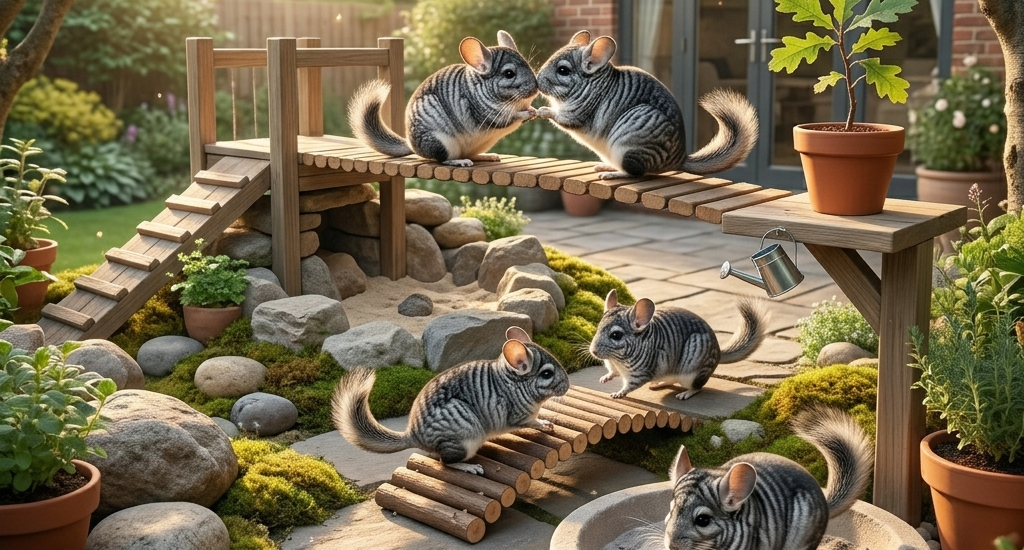
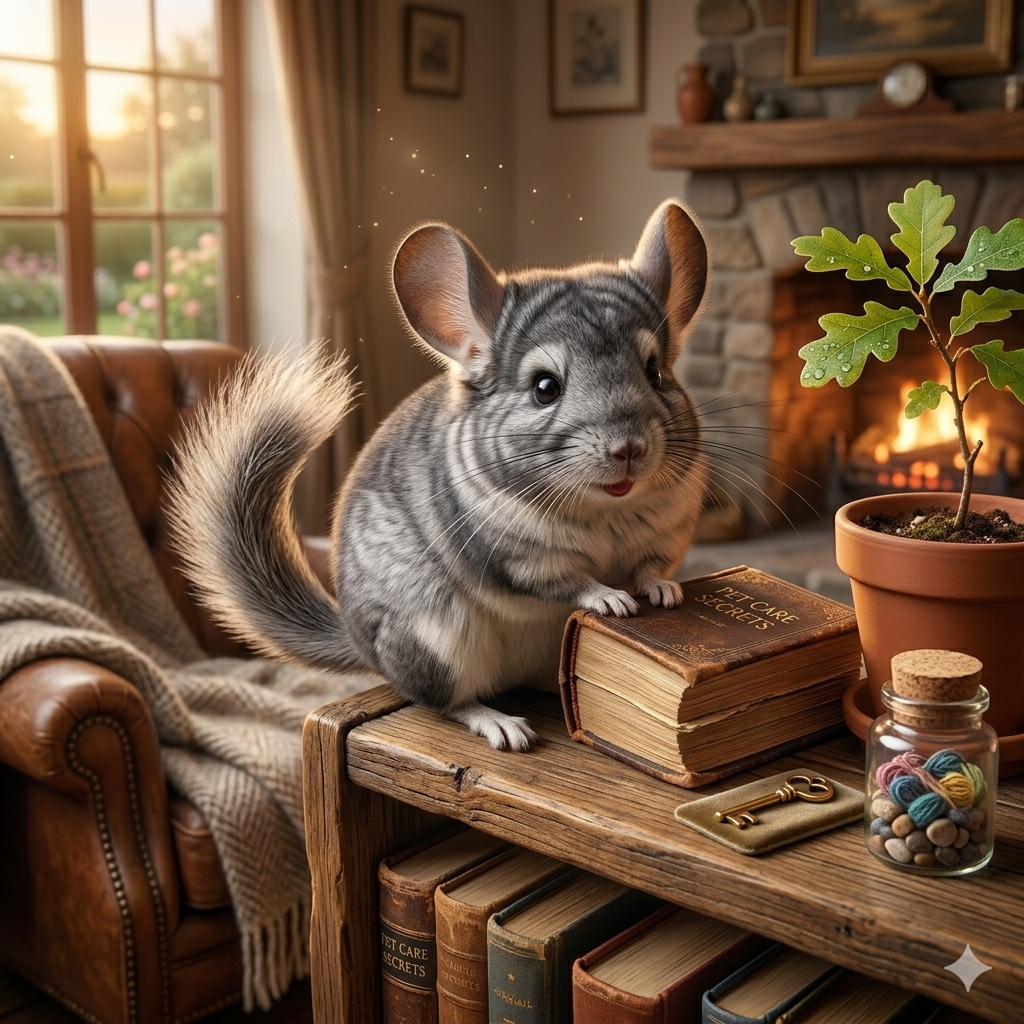
The average chinchilla weighs between 400 and 500 grams and is roughly the size of a large squirrel, falling somewhere between a rabbit and a guinea pig in terms of body size. They have large, rounded ears that serve a dual purpose: hearing and thermoregulation. A network of veins close to the skin surface on the ears helps regulate and cool the animal’s blood temperature, a clever physiological trick for surviving the harsh mountain environment. Chinchillas also possess a long, bushy tail — coarser in texture than the rest of their fur — which acts as a rudder when running and leaping. Their powerful hind legs are built for speed and agility, enabling them to jump, hop, and maneuver rapidly to evade predators. Remarkably, chinchillas can leap over six feet (1.8 meters) in height — there are even reports of pet chinchillas jumping onto the tops of refrigerators.
Perhaps the most celebrated feature of chinchillas is their extraordinary coat. Each hair follicle on a chinchilla produces more than 50 individual hairs — compare this to humans, who have just one hair per follicle. This extraordinary density makes their fur the softest of any land mammal, and it is so thick that it is generally inhospitable to parasites like fleas, ticks, or mites. The standard wild chinchilla color is a mottled gray that blends seamlessly into the rocky, sandy terrain of the Andes. Through selective domestic breeding, however, chinchillas now come in over a dozen color variations, including beige, violet, black velvet, sapphire, and white.
A Brief but Fascinating History of Chinchillas
While chinchillas are still a relatively recent discovery for many pet owners today, humanity’s relationship with these animals stretches back thousands of years. Chinchillas are native specifically to the foothills of the Andes Mountains, spanning Peru, Bolivia, Chile, and Argentina, where the Inca civilization was among the first to take notice of them. The Incans recognized the extraordinary quality of the chinchilla’s pelt and captured the animals to make clothing and garments from their fur.
As European contact with South America expanded, knowledge of the chinchilla’s precious fur spread across the globe. By the early 1900s, the exportation of chinchilla fur had reached an all-time high. Hunters and trappers swept the Andes in enormous numbers, decimating wild populations at a catastrophic rate. Experts estimate that approximately 21 million wild chinchillas were killed for their fur between 1840 and 1916. Despite this staggering toll, chinchilla fur coats remained extraordinarily rare and expensive — because it takes the pelts of approximately 140 individual chinchillas to make a single full-length coat. By the 1920s, wild chinchillas had been hunted to the brink of extinction. In 1918, the Chilean government responded by banning the trapping of chinchillas and the export of their fur.
As wild chinchillas became nearly impossible to find, efforts to breed them in captivity began — though with very limited early success. The turning point came in the 1930s, when a former mining engineer named M.F. Chapman returned from the Andes to America with 12 chinchillas and launched a dedicated breeding program. Chapman successfully developed the husbandry techniques that allowed chinchillas to reproduce in captivity, effectively founding the profession of chinchilla ranching. By the 1970s, domestic chinchilla breeding was well established and ranching flourished. A few decades later, chinchillas began to emerge as beloved companion animals, particularly in Europe and North America.
Despite the growth of domestic populations, wild chinchillas continued their decline. In 1973, the Convention on International Trade in Endangered Species (CITES) enacted a ban on the exportation and importation of live chinchillas and chinchilla parts from South America. Today, hunting chinchillas is illegal under CITES, and the species is considered endangered in its natural habitat. Wild chinchillas now survive in only one area: the Andes of Central Chile. Diminishing habitats caused by mining, wood collection, and livestock grazing continue to threaten remaining populations, despite their protected legal status. Organizations such as Saving the Wild Chinchilla, Inc. — a Chilean-based nonprofit with a US chapter — are working to establish nature reserves where wild chinchillas can live and breed in safety.
Understanding Wild Chinchilla Behavior
One of the best ways to become a better chinchilla owner is to understand how wild chinchillas live. Domestic chinchillas retain many of the instincts and physical attributes of their wild ancestors, and recognizing these traits can help you interact with your pet more effectively.
In the wild, chinchillas are social animals that live in mixed-gender colonies. They make their homes primarily within the cardon plant (Puya berteroniana), a terrestrial succulent bromeliad found on Andean mountain slopes. Chinchillas dig tunnels throughout this plant and create burrows for shelter, though some colonies opt for rocky crevices. They are prey animals — hunted by foxes, eagles, and hawks — and their survival instincts are sharp. When threatened, a chinchilla’s first instinct is to freeze, cower, and dash for cover. In captivity, this behavior manifests when a chinchilla tries to wedge itself into a tight space, mimicking the safety of a rock crevice.
Chinchillas have also developed remarkable physical defense mechanisms. Female chinchillas confronted by a predator can stand on their hind legs and spray urine directly at the attacker. All chinchillas possess anal glands that release an unpleasant odor when the animal is captured or frightened, a smell designed to discourage predators. Perhaps most interestingly, chinchillas can shed large patches of fur in a process called “fur slip” — leaving a predator holding nothing but a tuft of fur while the chinchilla escapes. This same fur slip can occur in captivity through rough or improper handling, so gentle interaction is always essential.
Wild chinchillas are nocturnal, meaning they are most active in the early morning hours and at dusk, spending the daytime sleeping. Because their red blood cells are adapted to absorb more oxygen than those of other rodents, they are uniquely suited to surviving at altitudes over 4,000 meters. Wild chinchillas typically give birth twice a year, usually producing two babies per litter after an 111-day gestation period. Newborn chinchillas arrive with their eyes open and a full coat of fur, and both parents share responsibility for raising the young. By four weeks of age, the babies are weaned and able to forage independently. The natural diet of wild chinchillas consists of tough Andean plants including rumpiato, pingo pingo, monte negro, cardon, olivillo del norte, and maravilla del campo.
Is a Chinchilla the Right Pet for You?
Chinchillas can make exceptional companions, but they are not the right fit for everyone. Before bringing one into your home, it is important to reflect carefully on your lifestyle, household, and long-term commitment. Here are the key questions every prospective chinchilla owner should honestly answer:
Are you ready for a 15 to 20-year commitment? Unlike hamsters or gerbils, chinchillas are among the longest-lived rodents on earth. In captivity, chinchillas typically live between 10 and 15 years, and with optimal care, some individuals have been known to reach 20 years or more. This is a commitment comparable to owning a cat or a dog, so you must be prepared to care for a chinchilla through life’s changes — relocations, career shifts, family changes, and more.
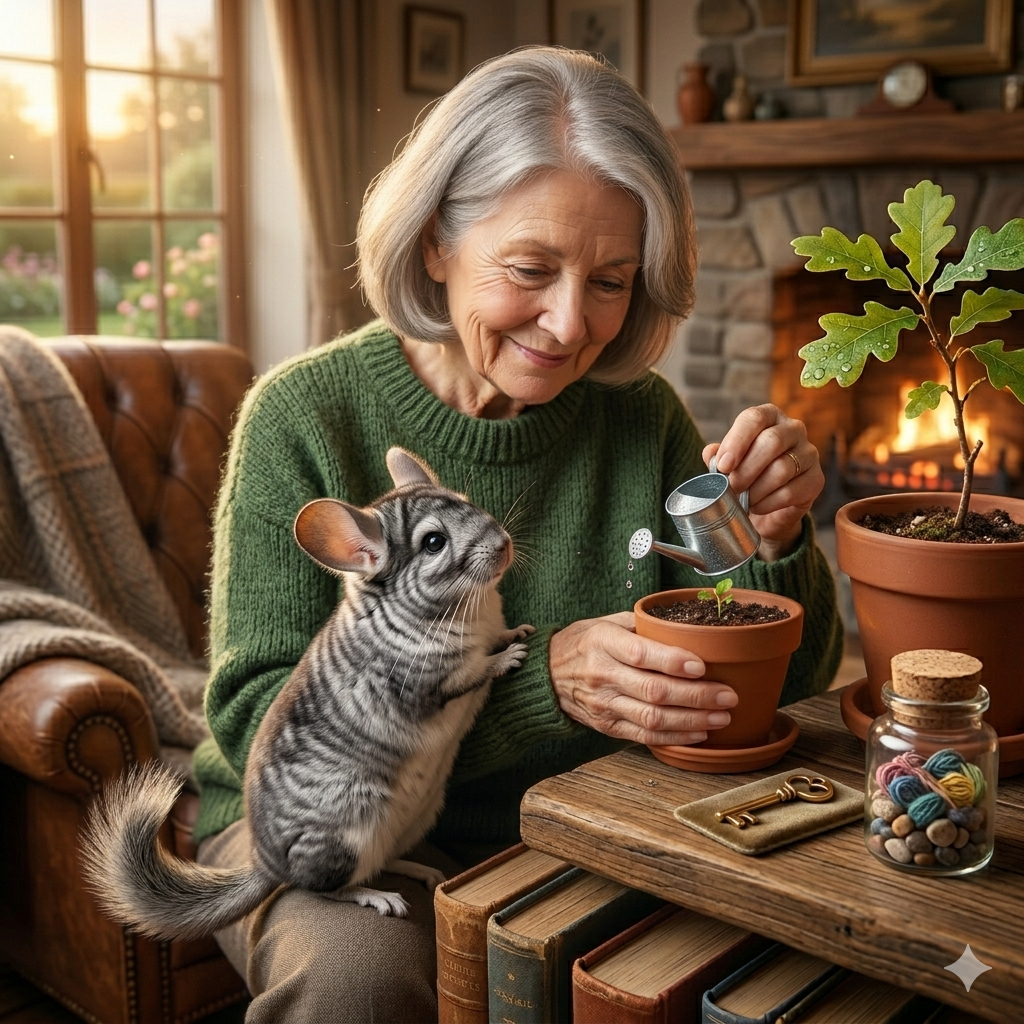
Do you have the time for daily care? Chinchillas require roughly one to two hours of attention per day. This includes feeding, providing fresh water, cleaning soiled bedding, and allowing supervised exercise time outside the cage. Weekly tasks include a full cage cleaning and dust baths. While chinchillas are less demanding than dogs in some respects — no walks or obedience training required — they are far from low-maintenance.
Do you have the financial resources? Chinchillas require an appropriately sized multi-level cage, quality food and hay, dust for bathing, toys, bedding, and routine veterinary care from an exotic animal specialist. Unexpected illness can add to these costs significantly. All newly adopted chinchillas should be examined by a qualified exotic veterinarian within two weeks of coming home, and annual check-ups — including fecal tests for parasites — are strongly recommended.
Is your home environment suitable? Chinchillas are highly sensitive to heat. The optimal temperature for a chinchilla’s environment is between 55°F and 70°F (13°C–21°C), and temperatures above 80°F (27°C) can be life-threatening, potentially causing fatal heat stroke. If you live in a warm climate or prefer your home warm, a chinchilla may not be the right fit unless you can reliably provide a cool, climate-controlled environment. Humidity should also be kept below 40–50%, as high humidity compounds the risk of overheating and respiratory disease.
Are you prepared for a nocturnal animal? Chinchillas sleep during the day and are most active at dusk and through the night. If your chinchilla’s cage is in your bedroom, expect to be awakened by activity, squeaks, and the sounds of playing. This is not a pet for light sleepers unless the cage is kept in a separate room.
Do you have young children? Because chinchillas are delicate, fast-moving animals with fragile skeletons, they are generally not recommended as pets for children under 10 years of age. Their sharp front teeth can deliver a painful bite if they are startled, handled too roughly, or feel cornered. Older children can interact with chinchillas happily, but always under adult supervision and with careful instruction on proper, gentle handling.
Do you travel frequently? Chinchillas need daily attention and care. While they can be left overnight with sufficient food and water, any longer absence requires a trusted pet sitter or caretaker familiar with chinchilla needs. Chinchillas are not appropriate pets for people who are frequently away from home.
Unique Characteristics of Chinchillas
To further help you decide whether a chinchilla is the right pet for your household, consider these distinctive traits that set chinchillas apart from other small animals:
Chinchillas are nocturnal creatures that prefer evenings and nights for activity and rest during daylight hours. They are social animals by nature — in the wild they live in colonies — and many experts recommend keeping them in pairs or small groups to support their emotional well-being. A single chinchilla can form a strong bond with its human owner, but companionship from another chinchilla often reduces stress and promotes happier behavior. A 2024 peer-reviewed study published in scientific literature found that behavioral indicators of good welfare — such as playing and cuddling with companions — were observed several times per day by the majority of chinchilla owners surveyed, underscoring the importance of social interaction for these animals.
Chinchillas are vocal communicators. They produce a range of sounds including chirps, squeaks, barks, and hiccupping noises, all of which serve as social messages. Their hearing range is similar to that of humans, and they are easily startled by sudden loud sounds. Chinchillas are also voracious chewers — their continuously growing incisor teeth mean they will gnaw on nearly anything within reach, including furniture, electrical cords, and cage accessories. Any space where your chinchilla roams freely must be thoroughly chinchilla-proofed.
One of the most endearing traits chinchillas display is affection. When a well-socialized chinchilla has bonded with its owner, it may wag its tail or run excitedly when you enter the room. Some chinchillas exhibit what is known as “popcorning” — spontaneous jumping for joy when happy or excited. They may offer gentle nibbles as a sign of affection. They may sit on your shoulder as you work, or curl contentedly in your lap as you stroke their impossibly soft fur. This capacity for genuine connection is, for many owners, the most treasured aspect of chinchilla ownership.
Checking for Allergies Before Bringing a Chinchilla Home
Before committing to chinchilla ownership, it is essential to determine whether anyone in your household is allergic. Spend time holding or handling chinchillas before purchasing or adopting one. Many people discover that while they have no allergic reaction to the chinchilla itself, they are highly sensitive to the dust chinchillas must bathe in to maintain their coats. Chinchilla dust can become airborne during bath time and settle on nearby surfaces, causing allergic symptoms including sneezing, watery eyes, and respiratory irritation. If your allergy is solely to the dust, ownership may still be possible with careful management — keeping yourself away from the bathing area, bathing the chinchilla in a ventilated space, and using an air purifier. However, if your reaction is severe, a chinchilla may not be the right pet for your household.
Chinchillas and Other Pets
If you already share your home with other animals, it is critical to think carefully before adding a chinchilla. As prey animals, chinchillas retain strong wild instincts and are likely to perceive dogs and cats as predators, regardless of how domesticated those animals are. Most adult cats do not display strong hunting urges toward chinchillas due to their larger size compared to mice or rats, but this is not guaranteed. Dogs, particularly those with strong prey drives, pose a significant risk and should never be left unsupervised near a chinchilla. As a chinchilla owner, your responsibility includes creating a safe environment that protects your chin from the other animals in your home and neighborhood.
Housing Your Chinchilla: Cage Setup and Environment
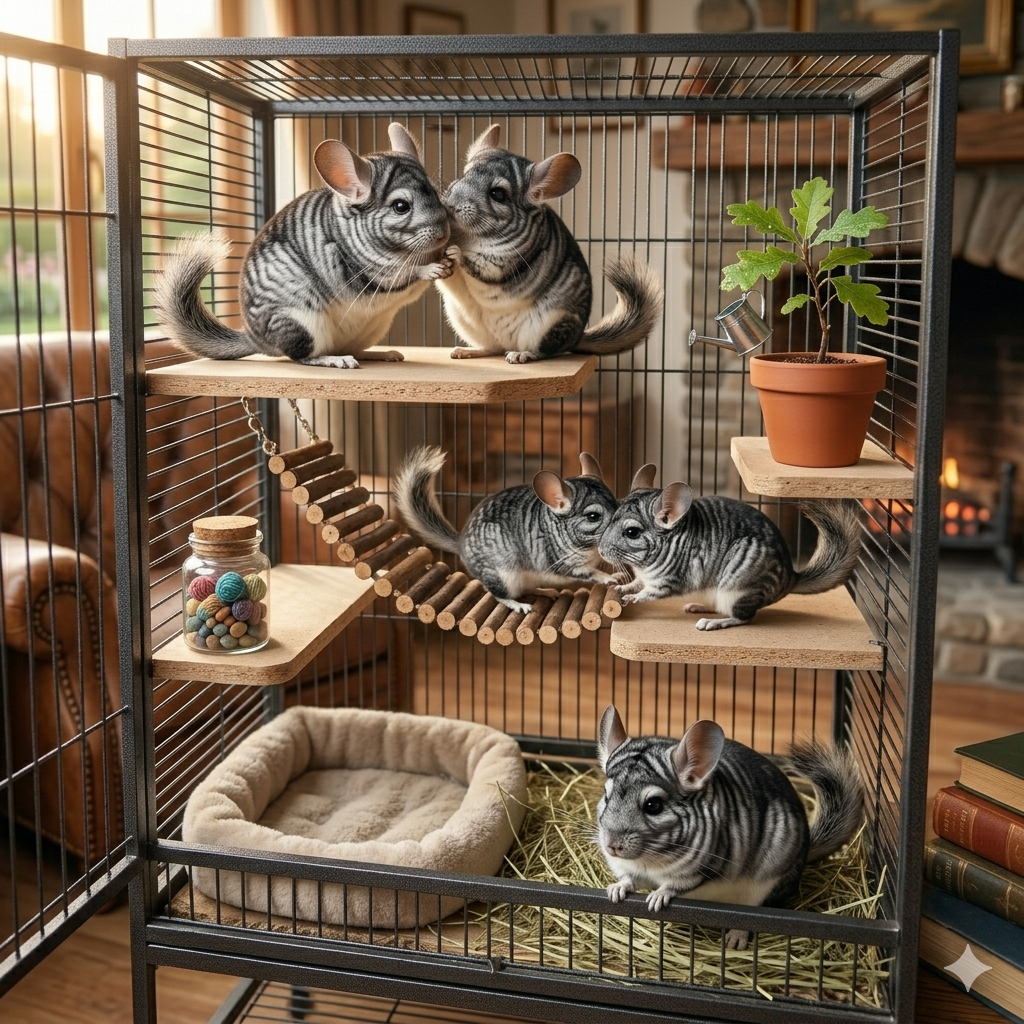
Providing the right home is one of the most important aspects of chinchilla care. Because chinchillas love to jump and climb, their enclosure should be taller than it is wide. A single chinchilla requires a minimum cage size of 2 feet by 2 feet by 4 feet, though more space is always better. Multi-level cages with ramps and shelves give chinchillas opportunities to exercise their natural agility and keep them mentally stimulated. The ideal habitat features wire mesh walls with openings no more than one inch apart — small enough to prevent escape or injury. The floor of the cage should be solid (a plastic tray is ideal) rather than wire mesh, since wire floors can cause serious pressure sores on a chinchilla’s sensitive feet. Avoid plastic cages entirely, as chinchillas will gnaw through them.
Place the cage in a room where you spend a significant amount of time, such as a living room, so that your chinchilla can benefit from social proximity. The cage should never be positioned in direct sunlight or in a drafty area. Temperature control is non-negotiable: keep the room between 55°F and 70°F at all times, and never allow temperatures to exceed 80°F. Humidity should stay below 40–50%.
Inside the cage, include one to two inches of high-quality bedding — paper-based bedding is strongly preferred. Never use cedar or pine shavings, as the aromatic oils can irritate a chinchilla’s respiratory tract if inhaled or ingested. Include hiding places such as nesting boxes where your chinchilla can retreat to feel secure. Chinchillas are prey animals and need safe spots to shelter when they feel anxious or startled. Provide wooden chew toys to support dental health and satisfy their natural urge to gnaw. Cages should be fully cleaned with soap and water at least once per week, with bedding replaced at the same time. Food bowls and water bottles should be cleaned daily.
Daily Care and Exercise
Caring for chinchillas is a daily responsibility that goes beyond simply topping up food and water. Here is what a responsible chinchilla care routine looks like:
Feeding and water: Provide fresh food and water every day. Remove and replace any uneaten fresh food to prevent spoilage.
Cage spot cleaning: Remove soiled bedding and droppings daily to keep the environment hygienic and odor-free.
Exercise: Chinchillas need at least two hours of supervised exercise outside the cage each day. This is non-negotiable for their physical and mental health. Designate a chinchilla-proofed room where they can run, explore, and play freely. Remove or cover electrical cords, seal gaps behind furniture, and remove any items you do not want chewed.
Weekly tasks: Once a week, perform a full cage clean-out and give your chinchilla a dust bath.
Dust bathing: Chinchillas maintain their extraordinary coats through dust baths rather than water baths. You should never wash a chinchilla with soap and water — their dense fur takes a very long time to dry, which can lead to skin irritation, fungal infections, and significant distress. Provide a shallow container filled with commercially available chinchilla dust (not sand, which is too abrasive and can damage their skin and eyes) and allow your chinchilla to roll in it for 10 to 15 minutes. This should happen approximately three times per week. After bathing, remove the dust container so it does not become soiled. As a helpful tip, storing chinchilla dust in the refrigerator during warmer months can help your pet stay cool during bath time.
What to Feed Your Chinchillas
Chinchillas have specialized dietary needs rooted in the nutritionally sparse, high-fiber plants of their native Andes habitat. The key principle of a healthy chinchilla diet is high fiber and low sugar. The foundation of their diet should be unlimited high-quality grass hay — timothy hay is the most commonly recommended variety. Hay is not only nutritionally essential but physically necessary: chinchillas have open-rooted teeth that grow continuously throughout their lives, and the abrasive action of chewing hay keeps their teeth worn to a healthy length.
In addition to hay, chinchillas can be supplemented with small amounts of high-quality commercial chinchilla pellets. Dark, leafy vegetables can also be offered in modest quantities. Safe treat options — offered only occasionally and in small amounts — include plain Cheerios, hibiscus leaves, blackberry leaves, dried apple, dried banana, raisins, cranberries, and fresh herbs such as oregano, peppermint, lavender, dandelion, rosemary, and parsley. Safe fruit and berry branches such as apple, pear, blackberry, and strawberry also make excellent natural chews.
Foods to strictly avoid include corn, citrus fruits, chocolate, alcohol, caffeine, seeds, nuts, and any branches from unknown or treated trees. Do not offer excessive sugary treats, as chinchillas are susceptible to digestive issues. Chinchillas perform a digestive process called caecotrophy — similar to rabbits — in which special droppings called caecotrophs are produced and re-ingested to extract maximum nutritional value from their food. This is entirely normal behavior.
Fresh, clean water must be available to your chinchilla 24 hours a day. A sipper bottle attached to the cage side is the most hygienic option and prevents water from becoming contaminated with bedding or droppings.
Chinchilla Health: Common Issues and Veterinary Care
Chinchillas are generally healthy animals when properly cared for, but they are susceptible to several specific health issues that every owner should be familiar with.
Dental disease: Because chinchilla teeth grow continuously, improper diet — particularly insufficient hay — can lead to overgrown teeth. Signs include drooling, loss of appetite, and difficulty eating. Regular hay consumption is the best prevention, and any suspected dental problems should be evaluated by a veterinarian promptly.
Heat stroke: Chinchillas are extremely vulnerable to heat. Temperatures above 80°F, especially when combined with high humidity, can cause fatal heat stroke rapidly. Signs include panting, open-mouth breathing, and elevated body temperature. This is a veterinary emergency.
Respiratory disease: Overcrowding, poor ventilation, and high humidity can predispose chinchillas to respiratory infections that can quickly progress to pneumonia. Symptoms include lethargy, loss of appetite, nasal discharge, labored breathing, and swollen lymph nodes.
Fur slip: As described earlier, chinchillas can lose patches of fur when handled roughly or when stressed. The fur generally regrows over several months.
Antibiotic sensitivity: Chinchillas and other rodents are extremely sensitive to antibiotic toxicity. Common human antibiotics, including penicillin and erythromycin, can be fatal to chinchillas. Never administer any medication to your chinchilla without veterinary guidance from a specialist familiar with exotic animals.
Ringworm: A fungal skin infection (not a worm) that can cause fur loss and skin irritation. It is treatable but requires veterinary diagnosis.
Digestive issues: Improper diet, sudden food changes, or stress can cause gastrointestinal problems. Any deviation from normal eating, droppings, or activity levels should prompt a veterinary visit.
All newly adopted chinchillas should be seen by an exotic animal veterinarian within two weeks of adoption. Annual wellness examinations and fecal parasite testing are recommended thereafter. Note that chinchillas do not require vaccinations, but they do need a vet who is knowledgeable about exotic small animals, as standard small animal vets may have limited experience with chinchilla-specific conditions.
Where to Get a Chinchilla
Chinchillas can be obtained from several sources, each with important considerations. Reputable breeders who handle their chinchillas from a young age tend to produce sociable, well-adjusted animals. Animal shelters and chinchilla rescue organizations are also excellent sources — these groups find homes for abandoned or surrendered chinchillas and are staffed by passionate volunteers who deeply care about chinchilla welfare. Adopting from a rescue is a compassionate choice that gives an animal in need a second chance.
If considering a pet store, research the source of the animals carefully. A 2024 federal investigation revealed that a chinchilla breeding operation in Ohio confined animals in deplorable conditions and denied them veterinary care — a reminder that not all commercial breeding facilities maintain adequate welfare standards. Whatever source you choose, ensure the chinchilla you bring home is healthy, alert, and sociable. A healthy chinchilla should have bright, clear eyes, a smooth and complete coat, and be active and curious during its active hours.
Why Chinchillas Make Such Wonderful Pets
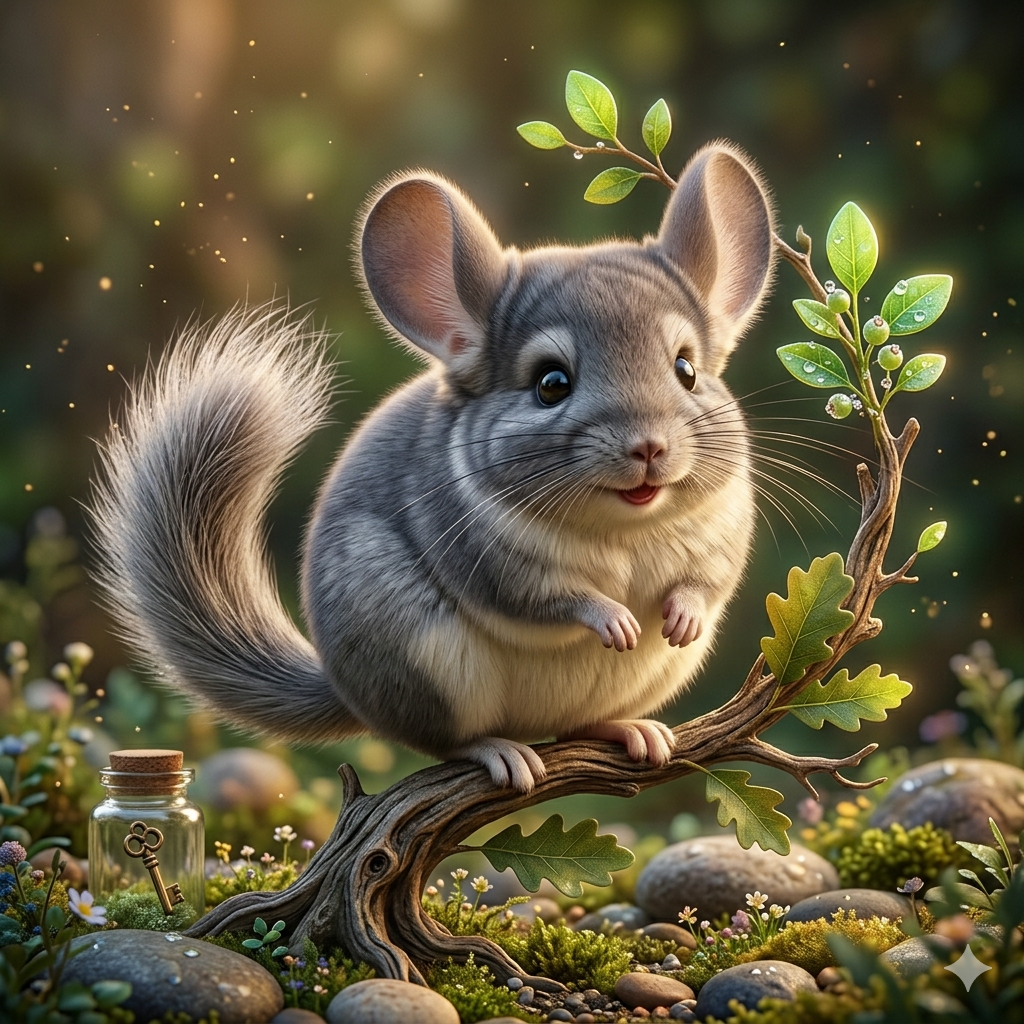
Ask any devoted chinchilla owner what makes their pet so special, and you will receive a passionate, detailed answer. Many owners adore the sheer sensory pleasure of a chinchilla’s coat — soft beyond description, available in a stunning range of colors, and a joy to touch. Others are charmed by the chinchilla’s physical quirks: the enormous round ears, the expressive eyes, the fluffy tail, the acrobatic leaping across a room. The antics of a chinchilla at play — spinning inside a bath house, gnawing on a wooden toy with furious concentration, popcorning with joy — are a source of endless entertainment.
But for the vast majority of chinchilla owners, it is the capacity for affection that elevates these animals above other small pets. Chinchillas have a remarkable ability to bond with their humans and make their owners feel genuinely wanted and loved. When your chinchilla chirps with excitement the moment you enter the room, or sits contentedly on your shoulder as you read or work, or gazes at you with soft, trusting eyes as you stroke its fur — these moments build a relationship unlike any other. Chinchillas wiggle their way into the hearts of even the most reserved animal owners, and they do so with quiet, persistent charm.
Chinchillas are also people-of-all-ages animals. While they require age-appropriate interaction and are not ideal for very young children as the primary caretaker, they bring joy to adults, teenagers, and families alike. They are clean, quiet compared to many pets, odorless when their cage is well maintained, and deeply rewarding to those willing to invest the time and attention they deserve.
Final Thoughts: Is a Chinchilla Right for Your Life?
Chinchillas are extraordinary animals — ancient in their connection to human history, fascinating in their biology, and deeply rewarding as companions. But chinchilla ownership is a serious commitment that deserves serious consideration. These are not starter pets, and they are not low-maintenance animals. They are intelligent, sensitive, long-lived creatures that need proper housing, a carefully managed diet, daily exercise, routine veterinary care, and genuine human engagement to thrive.
If you are still uncertain, consider fostering a chinchilla through a rescue organization or pet-sitting one for a friend. Spending a week or two in real daily care of a chinchilla will give you an honest picture of what ownership involves and whether it fits your lifestyle.
If, after careful consideration, you decide you are ready — congratulations. You are about to welcome one of the most uniquely wonderful companion animals on earth into your life. Care for your chinchilla well, give them the love and attention they deserve, and you will receive a depth of affection and companionship in return that will surprise and delight you for years, and perhaps decades, to come.