

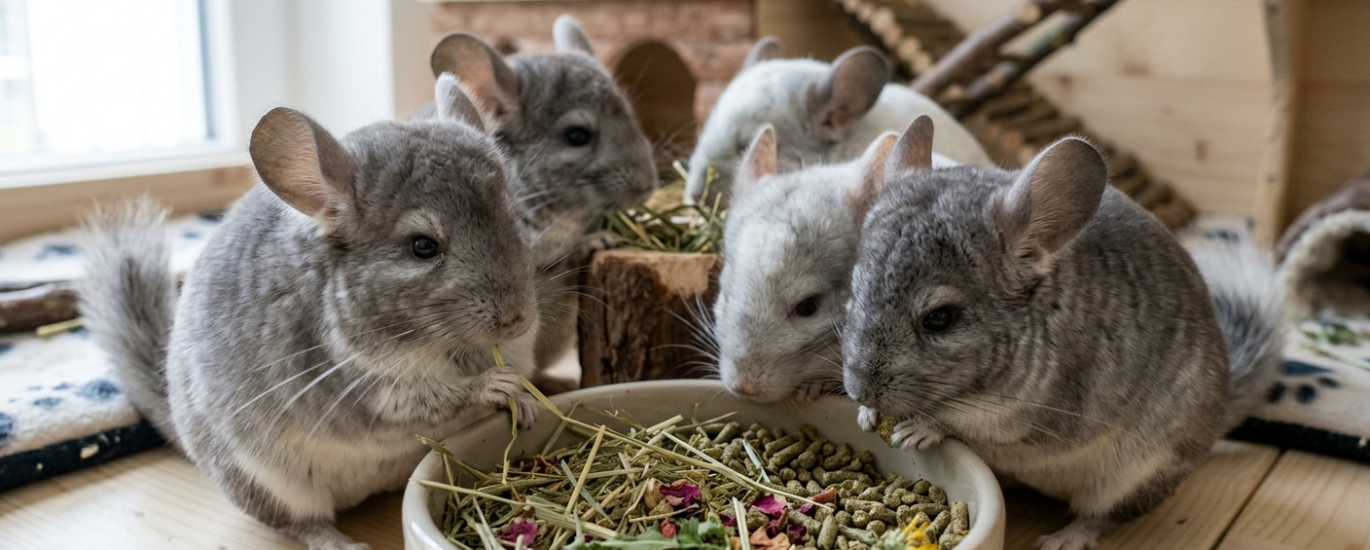
Chinchillas have one of the most fascinating taxonomic and breeding histories of any domesticated small mammal. The animals sold in pet shops today look noticeably different from their wild Andean relatives — the result of decades of selective breeding, subspecies blending, and the deliberate cultivation of dramatic color mutations. Understanding where your chinchilla came from, both biologically and historically, deepens your appreciation for this remarkable animal and helps you make more informed choices as an owner or breeder.
Wild Chinchillas: Two Distinct Species
Before exploring subspecies and domestic varieties, it’s important to establish a distinction that is often glossed over in pet care literature: there are actually two separate species of wild chinchilla, and they are not the same animal.
Chinchilla lanigera — The Long-Tailed Chinchilla
Chinchilla lanigera is the species from which the vast majority of domestic pet chinchillas descend. Native to the coastal mountain ranges of northern Chile, it is smaller and more slender than its cousin, with a longer tail and slightly larger ears. In the wild, C. lanigera is classified as Vulnerable on the IUCN Red List, with wild populations continuing to decline due to habitat loss, illegal trapping, and the historical devastation caused by the fur trade in the 19th and early 20th centuries. Current estimates suggest fewer than 10,000 individuals remain in the wild, concentrated in fragmented populations across Chile’s Atacama and Coquimbo regions.
Chinchilla chinchilla — The Short-Tailed Chinchilla
Chinchilla chinchilla (formerly called Chinchilla brevicaudata) is larger, stockier, and has shorter ears and a shorter tail than C. lanigera. It historically ranged across the Andes of Peru, Bolivia, Argentina, and Chile at higher altitudes — up to 6,000 meters above sea level. This species is now classified as Endangered and is considered functionally extinct across much of its former range. It is extremely rare in captivity and almost never seen in the pet trade. Conservation breeding programs exist in Chile and Bolivia, but progress has been slow due to the species’ low reproductive rate and habitat fragmentation.
2025 Conservation Update: Both wild chinchilla species remain under significant pressure. The Chilean government’s National Chinchilla Reserve protects a small wild population of C. lanigera, but illegal poaching continues. Several international conservation organizations — including the Chinchilla Conservation and Research Program — are now using GPS collar tracking and camera trap networks to monitor remaining wild colonies and assess genetic diversity, which has become critically narrow in some populations.
Domestic Chinchilla Subspecies and Conformation Types
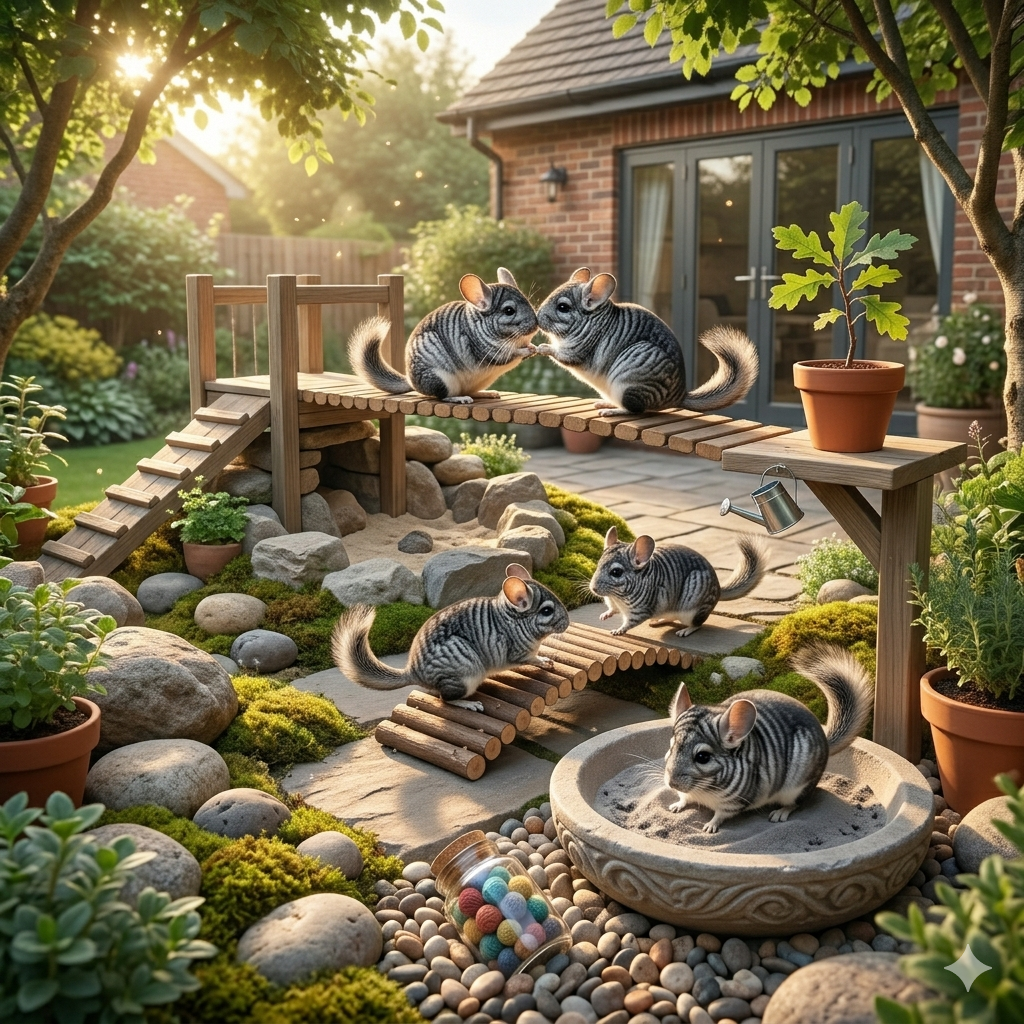
Domestic chinchillas are primarily descendants of Chinchilla lanigera, but through decades of breeding programs — particularly following Mathias F. Chapman’s famous 1923 capture of 11 wild chinchillas in Chile, which formed the foundation stock of virtually all domestic chinchillas in the US — three distinct conformation types have emerged. These types broadly correspond to three subspecies: the costina, the lanigera, and the brevicaulda.
Because these subspecies occupy different geographic ranges in the wild and do not naturally interbreed, domestic chinchillas that carry genes from multiple subspecies have a unique appearance found nowhere in nature. All domestic chinchillas carry more genes from one subspecies than the others and will therefore more closely resemble that subspecies in body structure.
The Costina
The costina is the smallest and most slender of the three conformation types. Key physical characteristics include:
- Weight: Typically under 20 ounces (under 570g)
- Face: Narrow, pointed nose with large, long ears
- Tail: Long relative to body size
- Coat: Shorter fur with a finer texture
- Build: Lean and angular with a narrow chest
Costina-type chinchillas are often described as more “rat-like” in profile compared to the other types, though this description doesn’t do justice to their sleek elegance. In show judging, the costina’s slender build is typically considered less desirable than the chunkier conformation of the brevicaulda type, as show standards generally favor a more robust, plush appearance.
The Lanigera
The lanigera sits between the costina and brevicaulda in terms of size and is the type most commonly represented in the pet chinchilla market, often in combination with costina genetics. Characteristics include:
- Weight: Approximately 16 to 24 ounces (450–680g)
- Face: Straighter, blunter nose than the costina; slightly smaller ears
- Tail: Long, comparable to or slightly longer than the costina
- Coat: Thick, long fur with a distinctly woolly texture
- Build: More substantial than the costina, with a broader chest
The lanigera’s dense, woolly coat is one of its most prized features in both the pet and show markets. Most pet chinchillas seen today are a blend of costina and lanigera genetics, which produces an animal that combines the lanigera’s coat quality with some of the costina’s liveliness and agility.
The Brevicaulda
The brevicaulda is the largest and most robust of the three conformation types, and the rarest in the US pet market. Characteristics include:
- Weight: Over 24 ounces (over 680g), with some individuals reaching 35 ounces or more
- Face: Blunt, broad nose; short, rounded ears set lower on the head
- Tail: Shorter than both the costina and lanigera
- Coat: Long, very thick, and densely woolly — the most plush of all three types
- Build: Chunky and compact, with a wide, barrel-shaped body
The brevicaulda’s coat is considered exceptional in the fur and show industries due to its extraordinary density and softness. However, this type is significantly rarer in domestic breeding programs than the costina-lanigera blend, and prospective owners seeking a brevicaulda-dominant chinchilla may need to seek out specialist breeders.
The North American Chinchilla
Recognized particularly within Canadian breeding circles, the North American chinchilla is considered a deliberate combination of all three subspecies — costina, lanigera, and brevicaulda — selectively bred to express the best traits of each. In practice, this means the plush, dense coat of the brevicaulda, the elegant tail of the lanigera, and the refined face of the costina. North American chinchillas are highly regarded in the show community and represent the aspirational conformation standard for many serious breeders.
Chinchilla Color Mutations: From Standard Gray to the Full Spectrum
One of the most dramatic developments in domestic chinchilla history has been the emergence and intentional cultivation of color mutations. Before the mid-20th century, essentially all domestic chinchillas displayed the same bluish-gray agouti coat seen in wild populations. Beginning in the 1950s, chinchilla breeders in the United States began noticing and preserving animals born with unusual colorations — and instead of removing them from breeding programs, they worked to establish these colorations as stable, heritable traits.
The result is one of the most diverse color palettes of any small pet mammal. It is important to note that coat color has no bearing whatsoever on a chinchilla’s temperament, intelligence, or health. Color is purely aesthetic.
The Empress Chinchilla Breeders Cooperative — the primary body sanctioning chinchilla shows across the US — officially recognizes seven mutation color categories in addition to the standard coloration. These are detailed below, with current breeding notes added where relevant.
Standard
The standard coloration is the original wild-type coat: a bluish-gray base with a white or cream belly. In the agouti pattern (the form seen in wild chinchillas), each individual hair shaft displays three or more bands of color. In the non-agouti or “straight” pattern, the hair is a consistent shade throughout.
Show judges evaluating standard chinchillas specifically look for a clear, blue-rich gray with no red, brown, or yellow undertones — a quality called clarity. The belly should be pure white with no yellowing or gray tinge. The standard remains the most commonly seen coloration in both pet and show populations.
Whites
The white category encompasses a broader range of light-colored chinchillas than the name suggests, including:
- Albino: White coat with red or pink eyes, caused by the absence of melanin. True albinos are relatively rare and can have slightly reduced vision sensitivity in bright light.
- Wilson White: White coat with dark (black) eyes. The most commonly seen white variant in the pet market.
- Pink White: White coat with a beige or pinkish undercoat, typically combined with pink or ruby eyes.
- Mosaic: One of the most visually striking mutations — a pattern of white patches on a darker base color, or dark patches on a white base. No two mosaic chinchillas are identical, making each animal genuinely unique.
- Silver and Stone: Light base coats with silver veiling overlaid, giving a shimmery, metallic appearance.
2025 Breeding Note: The genetics of white chinchillas are an area of active attention among responsible breeders. The Wilson White gene, when inherited in a double dose (homozygous), is associated with a lethal outcome — embryos that inherit two copies of the gene do not survive. For this reason, ethical breeders never cross two Wilson White chinchillas together. Single-gene (heterozygous) Wilson Whites are perfectly healthy. Prospective buyers should always ask breeders about the parentage and genetic background of white chinchillas.
Beige
Beige chinchillas display a range of warm champagne and tan tones, from very pale cream to a rich honey-gold. All beige chinchillas have a white belly. Named varieties within this category include Willman Beige, Tower Beige, and Touch of Velvet Beige, which differ in the depth and warmth of their base color.
Like the Wilson White, the beige gene (sometimes called the heterozygous beige) is associated with a lethal homozygous combination — two copies of the gene result in embryo death. Responsible breeders do not breed beige to beige.
Ebony and Charcoal
Any chinchilla displaying a blackish or very dark coloration across the back and sides, with a white belly, falls into this category — with the exception of the Black Velvet, which is classified separately. Ebony chinchillas range from a deep charcoal to an almost pure black, and the category includes various shades in between. The ebony gene is considered one of the most complex in chinchilla genetics, as it is dose-dependent: animals with one copy of the gene (heterozygous ebony) appear darker gray, while those with two copies (homozygous ebony) display the deepest, richest black tones.
Black Velvet
The Black Velvet is one of the most visually striking of all chinchilla colorations and is consistently popular among both pet owners and show participants. It is characterized by:
- A stark, deep black across the back, spine, and face
- A sharply defined, high-contrast white belly
- A black “stripe” running down the face, giving the animal a dramatic masked appearance
The Black Velvet gene (also called the TOV or “Touch of Velvet” gene) acts as a modifier that intensifies and clarifies the black coloration. It can be combined with other mutations to produce combinations such as Brown Velvet (Black Velvet combined with beige) or Violet Velvet.
Sapphire
The sapphire mutation produces a single, distinctive coloration: a cool gunmetal blue with a white belly. It was first identified in the 1960s and remains one of the rarer mutations in both pet and show populations. The sapphire gene is recessive, meaning both parents must carry the gene for a sapphire offspring to be produced — which is one reason the coloration remains relatively uncommon.
True sapphires are sometimes confused with standard chinchillas or blue-toned charcoals by inexperienced buyers, so genetic verification from a reputable breeder is recommended if sapphire coloration is important to you.
Violet
The violet mutation produces a soft, cool lavender-gray coloration reminiscent of the blue-point Siamese cat, to which it is often compared. Violet chinchillas typically display:
- A light lavender-gray body
- Distinctly darker gray-blue shading on the face, feet, and tail
- A white belly
Like the sapphire, the violet gene is recessive and both parents must carry it for violet offspring to result. Violets have grown significantly in popularity over the past decade and are now more widely available than they once were, though they remain rarer than standards, whites, or beiges.
2025 Breeding Note: Violet and sapphire can be combined to produce a “violet sapphire” — an extremely rare and sought-after coloration that blends the characteristics of both mutations. These animals are uncommon and typically command premium prices from specialist breeders.
Miscellany
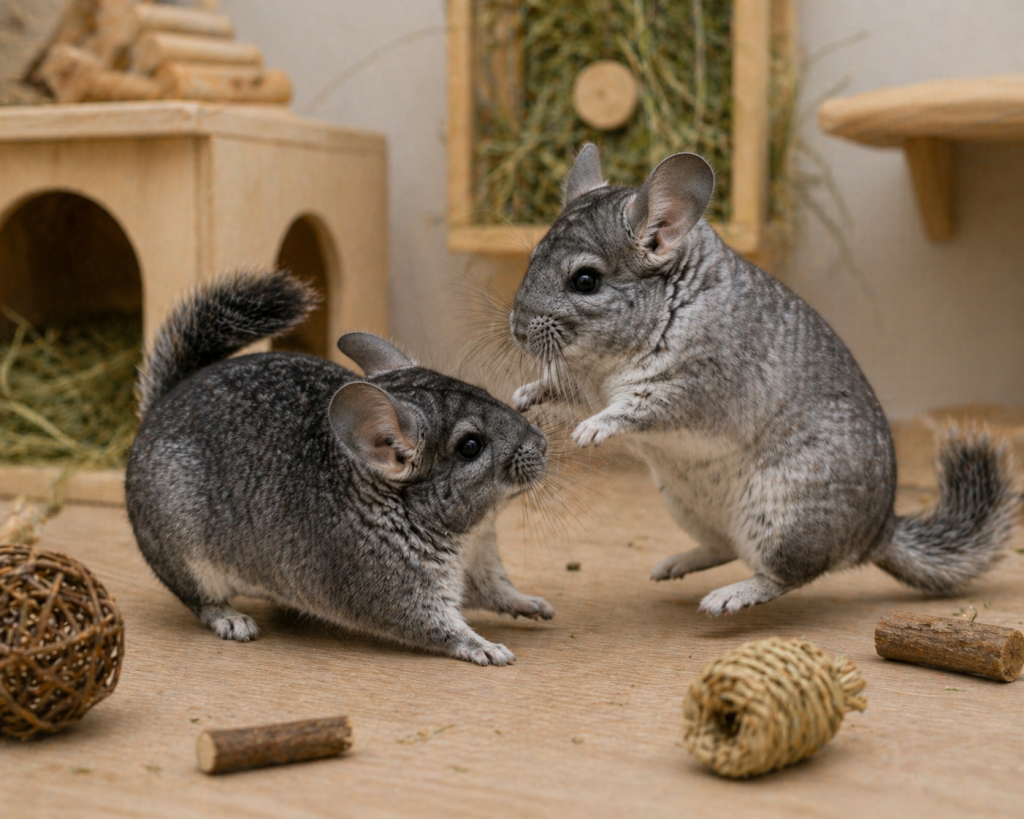
Any chinchilla whose coloration does not fit cleanly into the above seven categories is classified under the Miscellany group for show purposes. This is a catch-all category that captures the ongoing creativity of chinchilla breeding — as breeders continue to experiment with multi-gene combinations, new and complex colorations emerge that the existing categories cannot accommodate. Examples include combinations like the Goldbar (beige crossed with ebony), the Sullivan White, and various tan or brown-toned mutations still being standardized within the breeding community.
Genetics: The Modern Understanding
Chinchilla color genetics has become an increasingly sophisticated field, particularly over the past two decades. The following principles are now well-established among serious breeders:
Dominant vs. recessive genes. Some mutations (like Wilson White and ebony) are dominant or partially dominant — one copy of the gene produces a visible effect. Others (like sapphire, violet, and recessive beige) require two copies to express fully. Understanding which genes your chinchilla carries — not just which color they appear — is essential for responsible breeding.
Lethal gene combinations. Several chinchilla mutations carry lethal homozygous combinations. The Wilson White and dominant beige genes are the most established examples. Breeding two animals that each carry one of these genes risks producing embryos that cannot survive. Responsible breeders maintain detailed genetic records to avoid these pairings.
Multi-gene mutations. Many of the most striking chinchilla colorations seen today result from combining two or more mutations in a single animal. The complexity of predicting offspring colors from multi-gene parents has led to the development of online chinchilla color calculators and, increasingly, genetic testing services that can identify specific mutations from a cheek swab — a development that is transforming responsible breeding practice.
Choosing a Chinchilla: Does Type or Color Matter?
For the majority of pet owners, subspecies conformation type is an invisible distinction — all chinchillas make equally wonderful companions regardless of whether they lean costina, lanigera, or brevicaulda. Color, similarly, has no influence on personality, health, or lifespan.
What matters most when choosing a chinchilla is the reputation and practices of the breeder or rescue you source from — not the color or body type of the animal. A healthy, well-socialized chinchilla of any coloration from a responsible source will always outperform a show-color animal from a poorly managed background.
That said, if you are interested in showing, conformation type and coloration matter enormously — and sourcing from an established show breeder, with full genetic records, is the appropriate starting point.
Quick Reference: Subspecies at a Glance
| Feature | Costina | Lanigera | Brevicaulda |
|---|---|---|---|
| Weight | Under 20 oz | 16–24 oz | Over 24 oz |
| Nose | Narrow, pointed | Straight, blunt | Broad, blunt |
| Ears | Large, long | Medium | Short, rounded |
| Tail | Long | Long | Short |
| Coat | Shorter, finer | Thick, woolly | Very thick, plush |
| Rarity in US pet market | Common | Very common | Rare |
This article is for informational purposes and does not constitute veterinary or breeding advice. For guidance on sourcing, genetics, or showing chinchillas, consult a registered breeder affiliated with the Empress Chinchilla Breeders Cooperative or an equivalent national organization.