

Chinchilla Behavior: The Complete Guide to Understanding Your Pet Chinchilla (2026)
By ChinchillaCaréHQ | Updated April 2026
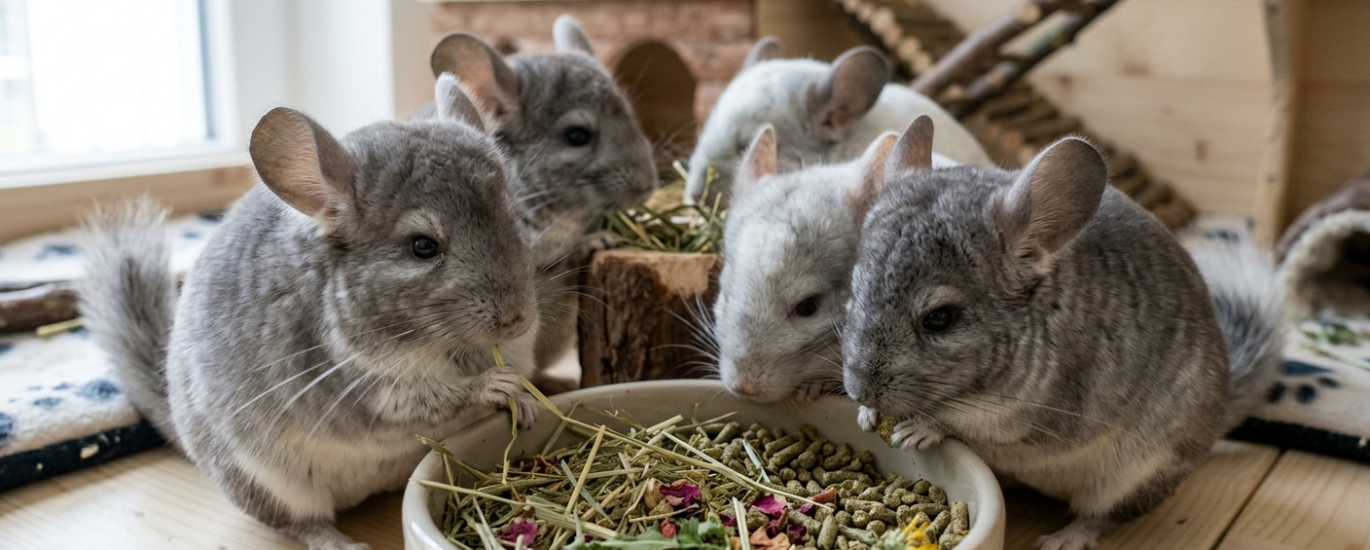
Chinchillas are rapidly gaining popularity as exotic pets — and it’s easy to see why. Beyond their impossibly soft fur and wide, curious eyes, these little animals have complex, fascinating personalities rooted in millions of years of mountain survival. Understanding chinchilla behavior isn’t just interesting; it’s essential to their wellbeing, your bond with them, and your ability to spot early signs of stress or illness.
This comprehensive guide covers everything from natural instincts and vocalizations to physical antics, social behavior, and the latest research on chinchilla welfare. Whether you’re a new owner or a seasoned chin enthusiast, read on to deepen your understanding of what makes these animals tick.
Table of Contents
- The Wild Origins of Chinchilla Behavior
- Nocturnal and Crepuscular Activity Patterns
- Chinchilla Vocalizations: What Is Your Chin Saying?
- Physical Behaviors and Fun Antics
- Social Behavior and Introducing a Cagemate
- Introducing Chinchillas to Other Pets
- Understanding Fear and Stress in Chinchillas
- Chinchilla Discipline: What Works and What Doesn’t
- Behavioral Red Flags to Watch For
- Frequently Asked Questions
1. The Wild Origins of Chinchilla Behavior {#wild-origins}
To truly understand your pet chinchilla, you need to look thousands of miles south — to the high, rocky Andes Mountains of South America. In the wild, chinchillas (Chinchilla lanigera) live in colonies, sheltering in rocky crevices and burrows at elevations above 3,000 meters. Their primary predators are eagles, hawks, and foxes, which means survival has always depended on two things: lightning-fast alertness and strong social bonds.
These traits didn’t disappear when chinchillas were domesticated. Even today, your pet chinchilla carries those ancient instincts. His startling speed when alarmed, his tendency to freeze and scan the room, and his desire to be near other chinchillas are all direct echoes of wild behavior patterns that kept his ancestors alive.
Interestingly, recent research confirms that chinchillas in captivity retain strong instinctual preferences rooted in their wild heritage — including a preference for smaller, more enclosed spaces that likely provide a greater sense of security, mirroring the rocky crevices where wild chinchillas hide from predators. This has important practical implications for how we house and enrich our pets.
Chinchillas are also highly intelligent with excellent long-term memories. A frightening or painful experience can shape their behavior toward a person or object for a very long time — another reason why positive, gentle handling from early on is so critical.
Thinking of welcoming a chinchilla into your home? Check out our guide to chinchilla adoption to find the right chin for your lifestyle, and explore our chinchilla types guide to learn about the different breeds and color mutations available.

2. Nocturnal and Crepuscular Activity Patterns {#nocturnal-behavior}
One of the first things new chinchilla owners notice is that their pet seems to sleep all day and come alive at night. This is completely normal — and deeply rooted in survival biology.
Chinchillas are crepuscular animals, meaning they are most active at dusk and dawn. In the wild, these low-light hours offered some protection from predators with keen daytime vision. Your pet retains this schedule, and you’ll notice his exercise wheel spinning, dust baths happening, and most vocalizations occurring in the early morning and early evening hours.
Practical tips for owners:
- Schedule feeding and playtime at dusk or dawn — your chinchilla will be at peak alertness and will engage far more enthusiastically.
- Don’t be alarmed if your chin is groggy during midday interaction. Give him a few minutes to wake up and he’ll soon be alert and responsive.
- Avoid placing his cage in a room with bright daytime light, as this can disrupt his natural cycle and cause chronic stress.
If your chinchilla’s activity schedule suddenly changes — becoming lethargic at his normally active times — this may indicate a health issue worth investigating. Visit our chinchilla health guide for more information on signs of illness.
3. Chinchilla Vocalizations: What Is Your Chin Saying? {#vocalizations}
Chinchillas are far more vocal than most people expect. While they can be quiet for stretches, they have a rich repertoire of sounds that communicate everything from contentment and curiosity to pain and aggression. Learning to “speak chinchilla” is one of the most rewarding aspects of ownership.
The Attention Squeak
A soft, continuous chortle or gentle squeak is your chinchilla asking for interaction. If he makes this sound while you’re in the room, he’s likely requesting pets, food, or a chance to come out and play. This is a lovely sign that your chin is comfortable and bonded with you.
The Alarm Call
A loud, sharp series of cries — or a sudden burst of sound — is your chinchilla’s alarm call. Inherited directly from his wild ancestors, this is meant to warn others of potential danger. It can be triggered by a loud noise, an unfamiliar person, or an unexpected movement. If your chinchilla alarm-calls frequently, examine his environment for stressors.
The Cry of Pain or Fear
A shrill, piercing squeak indicates pain or sudden fear. This is the sound a chinchilla makes when grabbed too roughly, startled severely, or genuinely hurt. If you hear this sound, stop what you’re doing immediately and give your chin space to calm down.
The Warning Click
A series of clicking sounds is a warning vocalization — directed at another chinchilla or even a human who has come too close for comfort. Most chinchillas make this sound from birth and it should be respected as a clear “back off” signal.
The Aggressive Growl
A raspy, snarling sound is reserved for moments of real conflict — usually between two chinchillas who are fighting or asserting dominance. If you hear this during a cagemate introduction, separate the animals immediately.
4. Physical Behaviors and Fun Antics {#physical-behaviors}
Chinchillas are extraordinarily physical animals. Watching them move is one of the genuine delights of chin ownership. Here’s what to expect:
Scurrying and Exploring
During free-roam time, your chinchilla will race around the room investigating every corner, sniffing surfaces, and examining objects with his paws and teeth. This exploratory behavior is healthy and normal. Try sitting on the floor — you may find your chin scurrying right over you.
Climbing
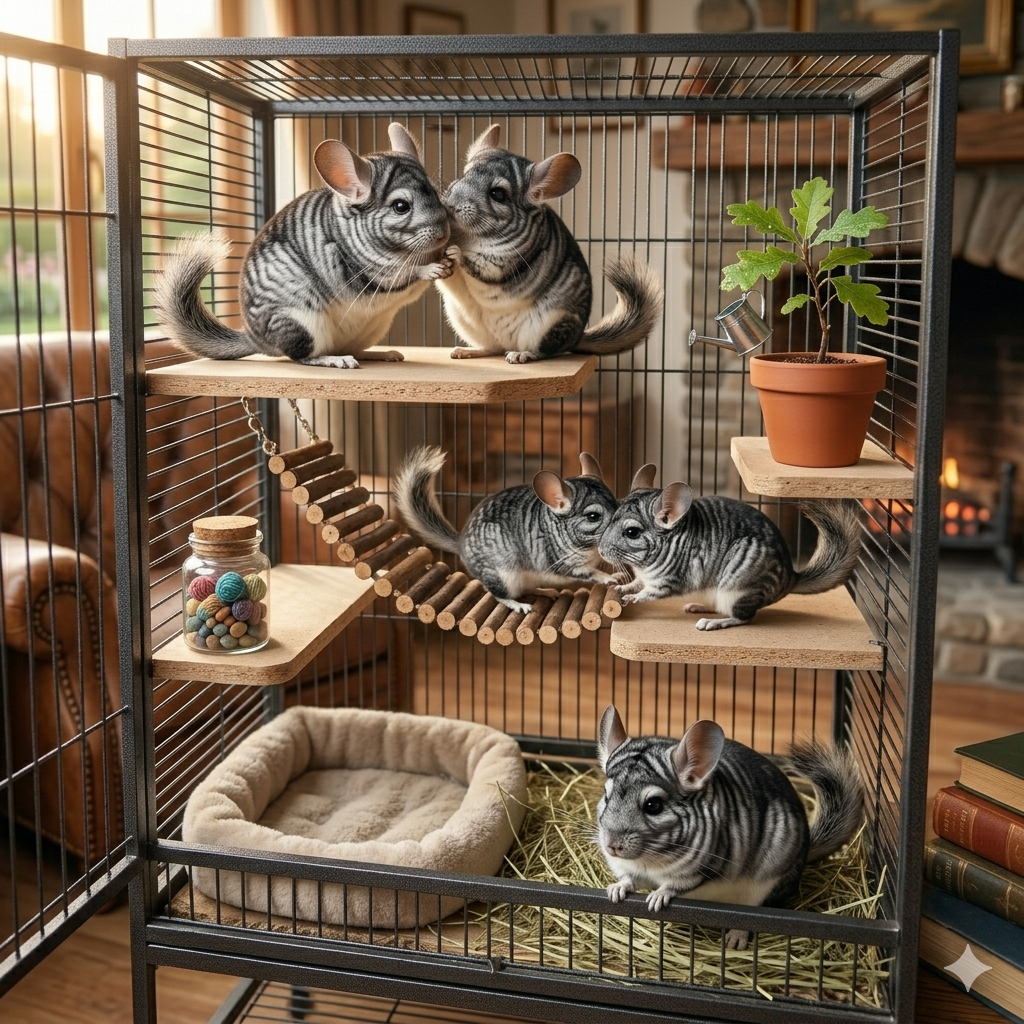
Chinchillas are surprisingly enthusiastic climbers. They will attempt to scale furniture, cage walls, and anything with footholds. Provide multi-level cage platforms to satisfy this urge safely, and supervise free-roam time to prevent falls from dangerous heights.
Jumping and Leaping
Chinchillas use their powerful hind legs to make impressive leaps — between cage shelves, across furniture, and sometimes seemingly out of pure joy. Spontaneous “popcorning” leaps (jumping straight up out of happiness) are one of the most entertaining behaviors you’ll witness.
The Dust Bath
The dust bath is perhaps the most uniquely chinchilla behavior of all, and it serves a critical functional purpose. In the wild, fine volcanic ash absorbed excess oils and moisture from the chinchilla’s incredibly dense fur (which can have up to 60 hairs per follicle). In captivity, special chinchilla dust replicates this. Your chin will roll, spin, flip, and contort himself with breathtaking speed — it looks chaotic but it is deeply satisfying and important for his coat health.
Dust baths should be offered two to three times per week. Over-bathing can dry out the skin, while skipping baths can cause a matted, greasy coat. For a full breakdown, read our detailed chinchilla grooming guide.
5. Social Behavior and Introducing a Cagemate {#social-behavior}
Chinchillas are fundamentally social animals. A 2024 peer-reviewed survey of pet chinchilla caretakers found that behavioral indicators of good welfare — such as playing and cuddling with companions — were observed several times per day by the majority of respondents, while repetitive and unwanted behaviors were far less common in well-cared-for animals. This reinforces what chin owners have long known: a chinchilla with a companion is generally a happier, healthier animal.
Choosing the Right Cagemate
- Same-litter pairs introduced as kits are the easiest to bond.
- Two young chinchillas meeting for the first time can usually work out well.
- Two females are the most challenging pairing — females tend toward dominant personalities and may never learn to co-exist peacefully.
- A male and female pair will bond readily but will breed unless the male is neutered.
Step-by-Step Introduction Process
Step 1: Side-by-side cages. Place the cages next to each other so the chinchillas can smell and see each other without physical contact. Watch for signs of aggression. Wait at least a week of calm coexistence before proceeding.
Step 2: The first shared space. Place the more dominant chinchilla into the less dominant one’s cage (not the other way around). This prevents the bossier chin from feeling his territory is being invaded. Stay in the room and watch carefully.
Step 3: Scent swapping. If tensions arise, try swapping the chinchillas between cages for a few hours. This helps each become familiar with the other’s scent.
Step 4: Neutral territory. Once the pair is getting along, move both chinchillas into a brand-new cage with fresh bedding — neutral ground that neither animal has claimed.
Never force incompatible chinchillas to share space. Chinchilla fights can cause serious injuries. If weeks of careful introduction fail, accept that these two individuals are simply not compatible.
Considering adding a second chin? Our chinchilla adoption guide covers what to look for when choosing a companion animal and where to find responsibly bred or rescued chinchillas.
6. Introducing Chinchillas to Other Pets {#other-pets}
Multi-pet households require extra care when a chinchilla is involved. As a prey animal, your chinchilla is hardwired to perceive dogs, cats, and even large parrots as potential threats — and the stress of a predator’s sustained presence can be genuinely harmful to his health.
Dogs
Dogs with strong chase instincts — terriers, beagles, greyhounds, huskies, corgis — may never be safe around a free-roaming chinchilla regardless of how much obedience training they have received. For other dogs, a slow, leashed introduction that keeps the dog calm and quiet in the same room as the caged chinchilla over many days can eventually result in tolerance or even companionship. Never allow your chinchilla to free-roam with a dog unsupervised.
Cats
Most adult cats will be cautious around a chinchilla due to its size. However, cats are predators and may attempt to stalk or chase a running chinchilla. Use a cat harness and leash during introductions, and trim your cat’s front claws beforehand. Some cat-chinchilla pairs become indifferent neighbors; others will never be safe together.
Parrots
Chinchillas are typically uninterested in parrots, and most parrots learn to ignore chinchillas. Problems arise only with particularly aggressive or jealous birds. Keep both animals’ wellbeing in mind, and never leave them unsupervised together.
The golden rule: never leave your chinchilla unsupervised with any other animal, even if previous interactions have gone smoothly.
7. Understanding Fear and Stress in Chinchillas {#fear-stress}
As prey animals, chinchillas have a hair-trigger stress response — and chronic stress has serious health consequences. Recent scientific research has shed important new light on this topic.
A 2025 study published in Physiology & Behavior found that chinchillas initially exhibited pronounced thigmotaxis (hugging the walls of a novel space) and freezing behavior when placed in an unfamiliar environment, consistent with high anxiety — but these fear responses diminished meaningfully with repeated, calm exposure, indicating that habituation does occur. This is encouraging for owners: gentle, repeated exposure to new experiences and environments really does help chinchillas build confidence over time. Patience is the key.
The 2024 University of Veterinary Medicine Vienna survey also found that caretakers perceived their chinchillas as more stressed when the animal was ill and more frequently showed fearful behavior toward the caretaker — and that owners who spent more time engaging with their animals reported feeling emotionally closer to them.
Signs of Stress in Chinchillas
- Excessive hiding or refusal to leave the hide box
- Fur chewing (barbering their own coat or a cagemate’s)
- Repetitive pacing or bar-chewing
- Loss of appetite
- Alarm calling with no obvious external trigger
Research notes that fur-chewing — a common stress indicator — is associated with unsuitable housing conditions and can lead to heat loss, affecting feed and water intake. If you notice fur chewing, consult our chinchilla health guide and consider consulting a vet familiar with exotic small mammals.
8. Chinchilla Discipline: What Works and What Doesn’t {#discipline}
Chinchillas are generally gentle animals and rarely require correction. When problem behaviors do occur, understanding the why behind them is always the first step.
Biting
Chinchillas bite for three main reasons:
- Fear or rough handling — Never correct a chin for biting if you grabbed or startled him. The correction needed is in your own behavior, not his.
- Territorial protection — A chinchilla who nips when you reach into his cage is feeling threatened. Try offering a small treat every time your hand enters the cage. He’ll soon associate your hand with something positive and become less defensive.
- Mistaken identity — If your finger smells like food, your chin may nip it thinking it’s a snack. A sharp “Ouch!” mimics the protest squeak chinchillas use with each other and is an effective, species-appropriate correction.
Chewing
Chewing is natural and necessary for chinchillas, whose teeth grow continuously throughout their lives. Redirect inappropriate chewing with a gentle squirt of water from a spray bottle, then immediately offer an appropriate chew item — untreated wood, pumice stone, or hay. You can learn more about the role of hay and diet in dental health in our chinchilla nutrition guide.
What Never Works
- Shouting or sudden loud noises (will increase fear, not compliance)
- Physical punishment of any kind
- Prolonged forced handling as “correction” — deeply stressful for prey animals
9. Behavioral Red Flags to Watch For {#red-flags}
Your chinchilla’s behavior is one of the most sensitive indicators of his overall health and wellbeing. Contact an exotic animal veterinarian if you observe any of the following:
- Sudden change in activity level — sleeping during peak active hours, or uncharacteristic lethargy during normal active times
- Persistent fur chewing — can indicate boredom, stress, dietary deficiency, or genetic predisposition
- Loss of appetite — often the first sign of dental problems, GI issues, or illness; see our chinchilla health guide
- Labored breathing or nasal discharge
- Loss of balance or head tilt — may indicate an inner ear infection
- Dull or uneven coat — healthy chinchillas maintain a thick, velvety coat; changes may signal nutritional gaps or underlying illness (see our grooming guide)
- Persistent aggressive behavior toward a previously compatible cagemate
10. Frequently Asked Questions {#faq}
Are chinchillas affectionate pets? Yes, but on their own terms. Chinchillas are curious and social, and many will seek out attention and enjoy gentle interaction. They are generally not “cuddly” in the way a dog or cat might be, but they can form strong, lasting bonds with their owners over time.
Do chinchillas need a companion? They strongly benefit from one. Research consistently shows that social interaction with conspecifics is one of the clearest behavioral indicators of good welfare in chinchillas. A lone chinchilla can thrive if given significant daily interaction with its owner, but a well-matched pair is generally happier.
Why does my chinchilla thump his back feet? Foot thumping is a warning signal — the chinchilla equivalent of a danger alert. It can indicate that your chin has heard or sensed something alarming nearby. Check his environment for stressors such as unfamiliar sounds, vibrations, or the presence of another animal.
Is it normal for my chinchilla to spray urine? Females in particular may spray urine as a defensive behavior when they feel threatened. It’s normal but worth noting if it happens frequently during handling — it usually means your chin needs more time and patient interaction to build trust.
How do I know if my chinchilla is happy? A happy chinchilla will be active during crepuscular hours, eager to explore during free-roam time, vocal with soft attention squeaks, enthusiastic about dust baths, and willing to approach you of his own accord. Spontaneous leaping is one of the clearest joy signals a chin can display.
Final Thoughts
Understanding chinchilla behavior is a journey, not a destination. These are complex, sensitive animals with a rich inner life shaped by millions of years of evolution in one of the world’s most demanding environments. The more you observe, the more you’ll appreciate the nuance behind every squeak, leap, and frenzied dust bath.
The latest research from institutions like the University of Veterinary Medicine Vienna and studies published in Scientific Reports confirm what dedicated chin owners have always known: environment, social connection, and attentive care make an enormous difference to chinchilla wellbeing and happiness.
Ready to go deeper? Explore the rest of our care library:
- 🐭 Chinchilla Adoption Guide — finding and choosing your new chin
- 🏥 Chinchilla Health Guide — keeping your pet in top condition
- 🥗 Chinchilla Nutrition Guide — what to feed (and what to avoid)
- 🛁 Chinchilla Grooming Guide — dust baths, coat care, and more
- 🎨 Chinchilla Types & Colors — exploring breeds and mutations
This article was written for informational purposes and reviewed for accuracy using the latest peer-reviewed research. Always consult a veterinarian experienced with exotic small mammals for medical advice specific to your pet.