
Safe & Toxic Foods
for Chinchillas
The most comprehensive A–Z reference of every food, herb, plant & wood — with scientific names, international equivalents, and cited sources.
Critical Safety Warning
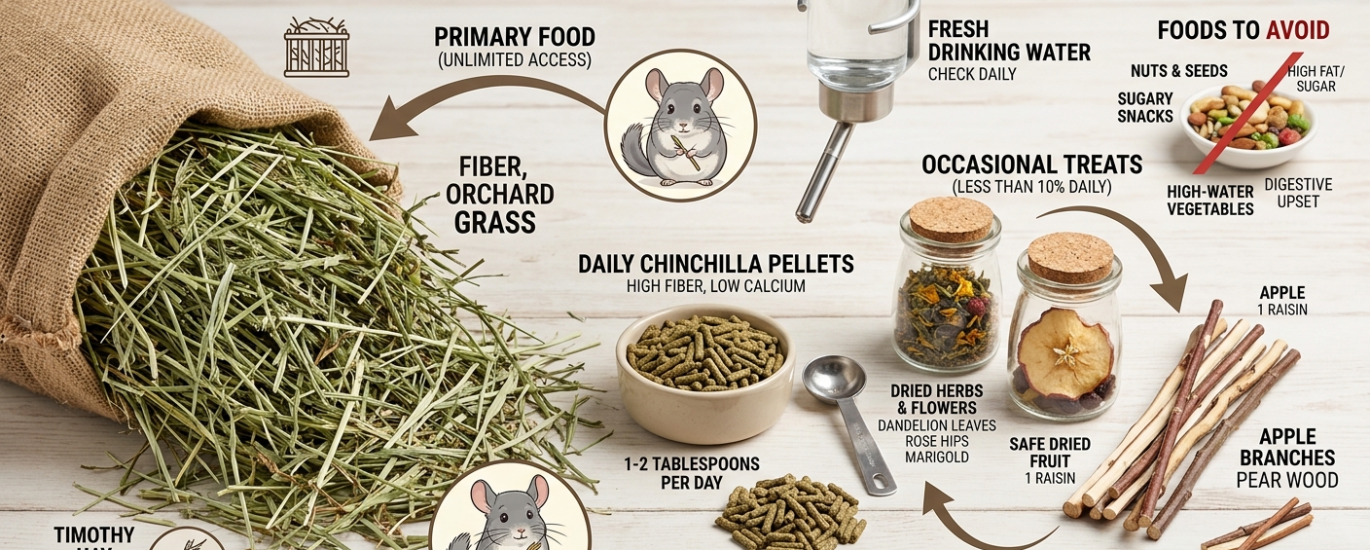
Chinchillas have extremely sensitive digestive systems. Even safe foods should be introduced gradually and offered as treats (not staples). Their primary diet must always be high-quality timothy or orchard grass hay (80–90%) and species-appropriate pellets. When in doubt, do not feed. Always consult an exotic-animal veterinarian for individual advice.
A beloved chin treat. Offer tiny pieces of peeled apple — the flesh only. Seeds and core are toxic (contain cyanogenic glycosides). Best offered dried. Branches are also safe and excellent for teeth.
Very high in sugar and starch. A tiny sliver (pea-sized) once a week is the absolute maximum. Easy to overfeed — causes obesity and digestive upset. Dried banana chips are even more concentrated — avoid.
Rich in antioxidants. Offer 1–2 berries maximum per week. High water content can cause loose stools in excess. Fresh or freeze-dried (no added sugar). A popular and widely-recommended occasional treat.
Flesh only — stone/pit, leaves, and bark contain cyanogenic glycosides (toxic). Tiny amount of flesh (no skin if waxed). Very high sugar. Dried cherries typically have added sugar — avoid. 1 small piece, rarely.
Dangerous for many small mammals — causes renal failure in dogs and is strongly suspected to be similarly harmful to chinchillas. Even raisins (dried grapes) are more concentrated. Never feed. The exact toxin is still unknown.
Flesh only, no skin or pit. Very sweet — limit strictly. Dried mango is popular but often contains added sugar or sulphites. Only unsweetened, unsulphured dried mango is acceptable, and only pea-sized amounts occasionally.
Peeled flesh only — remove seeds (contain cyanogenic glycosides, same as apple). Peeled, dried pear slices make excellent treats. Branches of pear trees are also safe and appreciated for gnawing.
One of the most recommended chin treats. Raspberry leaves are also safe and high in tannins (beneficial). Fresh or dried — 1–2 berries per week. Leaves can be offered more liberally dried. Widely studied in small mammal diets.
Sugar content is fairly high; acidic. Small amounts of fresh or dried strawberry are tolerated by most chinchillas. Limit to a small slice once weekly. Some individuals show loose stools — monitor closely after introduction.
Contains persin — a fungicidal toxin found in the flesh, skin, pit, and leaves. Causes respiratory distress, fluid accumulation around the heart and lungs, and death in many animals. Entire fruit — all parts — is dangerous. Never feed.
Oranges, lemons, limes, grapefruits, mandarins, tangerines — all are toxic to chinchillas. High acidity damages their digestive mucosa. Limonene and linalool in the oils are toxic to many small mammals. Never feed any part.
High in natural sugar. Beloved by chinchillas but must be offered sparingly — a tiny shred once or twice a week. Dried carrot is a popular treat. Carrot tops (greens) are also safe in small quantities.
Very high water content — too much causes diarrhoea. A thin slice once a week is acceptable. Peel first if waxed. Do not offer pickled or brined cucumber — salt is extremely harmful to chinchillas.
Brassica family — can cause bloating and gas in large amounts. High in calcium and oxalates which may contribute to bladder sludge. Tiny amounts rarely. Dried is safer than fresh (lower water, less fermentation risk).
All Allium species are toxic. N-propyl disulphide destroys red blood cells, causing haemolytic anaemia. Even small amounts are dangerous. Includes all forms — raw, cooked, dried, powdered. Leeks, chives, shallots — all toxic.
Raw potato contains solanine — especially in green areas and sprouts. Never feed. Even cooked potato is a bad choice — too starchy, too high in water, no nutritional benefit. Avoid all potato products entirely.
One of the best herbs for chinchillas. Calming, anti-inflammatory, supports digestion. Dried flowers and leaves both safe. A small pinch of dried chamomile 2–3 times per week. Widely recommended by exotic vets and breeders.
The entire plant — leaves, flowers, roots — is safe and nutritious. Rich in vitamins A, C, K and minerals. Dried dandelion is a staple in many quality chin herbal mixes. Excellent for liver support and digestion. One of the top recommended herbs.
Dried lavender flowers are calming and aromatic. Safe in small amounts as a treat or enrichment. Do not use lavender essential oil or concentrated products near chinchillas — only the dried plant. Popular in natural herbal chin treats.
Fresh mint is high in water and menthol — too much can irritate the digestive tract. Dried spearmint or peppermint leaves in tiny amounts are tolerated. Very small pinch — not daily. Some breeders avoid it entirely. Definitely avoid mint oils.
Dried nettles are excellent — rich in iron, calcium, vitamins A, C, K. Stings are neutralised by drying. One of the most nutritious herbs for chinchillas. A standard ingredient in quality herbal chin mixes. Can be offered several times per week.
Very aromatic — strong volatile oils. A tiny dried sprig occasionally is likely safe, but the high oil content can cause GI irritation with frequent feeding. Many experienced owners avoid it; use chamomile or dandelion instead as safer alternatives.
Excellent dried herb. Anti-inflammatory, supports circulation and digestion. Leaves and flowers both safe. Common in European herbal chinchilla treat mixes. Offer dried — a small pinch 2–3x per week. Traditional herbal medicine for animals.
Dried rose petals and rosehips are wonderful treats — naturally rich in vitamin C. Rosehip powder is commonly added to chin diets. Only use unsprayed, pesticide-free roses. Rose branches (thornless or de-thorned) are also safe for chewing.
Extremely toxic — contains cardiac glycosides (digitoxin, digoxin) that cause fatal heart arrhythmias. Every part of the plant is deadly — leaves, flowers, seeds, even water from a vase containing foxgloves. One of the most dangerous garden plants.
Contains triterpenoid saponins and polyacetylene compounds. Causes salivation, vomiting, abdominal pain, diarrhoea and in severe cases neurological signs. Extremely common houseplant — keep chinchillas away. All parts are toxic.
Very high in oxalic acid — causes severe kidney damage, hypocalcaemia (calcium binding), muscle weakness, and death. Leaves are especially toxic but stalks are also dangerous. Never feed any part of rhubarb to chinchillas.
Dried sunflower petals are safe enrichment. Seeds are high fat — limit to 1–2 per week maximum and offer hull-less. Too many seeds cause obesity and fatty liver disease. Often used as training treats. Flowers are more commonly found in herb mixes.
The gold standard of chin chewing wood. Hard, dense, long-lasting. Absolutely loved by most chinchillas. Commercially available as chin chews. Branches from unsprayed apple trees are perfect. Bake or dry before offering.
Extremely popular and widely used. Willow bark contains natural salicylates (anti-inflammatory). Branches, twigs, dried leaves all safe. Willow toys are commercially produced specifically for chinchillas. One of the most versatile and enriching woods available.
Birch branches and bark are safe and popular. The bark is especially enjoyed — chinchillas will strip it. Contains betulin and betulinic acid with mild anti-inflammatory properties. Both silver birch and downy birch are fine. Easily foraged in Europe and North America.
Hazel branches are excellent gnawing wood — popular in Europe especially. Hard enough to last, but not so tough it’s unmanageable. Widely used in commercial chin toys. The nuts (hazelnuts) are too fatty — limit to a tiny piece once monthly at most.
Oak contains tannins — high amounts can cause digestive upset and in large quantities may cause kidney damage. Small amounts of dried oak branches and leaves are generally tolerated and used by some breeders. Keep to minimal amounts. Acorns — avoid.
Fresh/raw pine, cedar, and fir contain aromatic phenols and volatile resins that damage the liver and respiratory system. NEVER use fresh or untreated. Kiln-dried pine (properly dried, resin-removed) is sometimes used commercially — but fresh wild branches are dangerous. Always avoid.
Wood, bark, leaves, and unripe berries contain sambunigrin (cyanogenic glycoside) — toxic. Ripe berries cooked for humans are safe, but never feed to chinchillas. Branches are commonly foraged but must be completely avoided. Causes vomiting, severe GI distress, and can be fatal.
Plain uncooked rolled oats are an excellent occasional treat — 1 teaspoon a day maximum. Good source of fibre and energy. Oat hay (oat grass) is even better — can be given more freely. Always plain — no flavoured or instant oatmeal.
Raw, unsalted, shell-free pumpkin seeds are high in fat. Use as an occasional treat — 1 seed weekly maximum. Shell-on seeds are a choking hazard. Often used as a natural dewormer. Never roasted or salted. More of a training treat than a regular food.
Particularly black walnut contains juglone — toxic to many mammals. All walnuts are extremely high in fat. Even small amounts can trigger acute GI upset and liver stress. The wood and roots of walnut trees are also toxic. Never feed walnuts of any kind.
Bitter almonds contain amygdalin which releases hydrogen cyanide. Sweet almonds are extremely high fat. Both types should be avoided. Even sweet almonds occasionally cause digestive issues. Never worth the risk — safer alternatives available for occasional fat-based treats.
Very high in fat and linoleic acid. Hull-less (shelled) raw sunflower seeds — 1 seed, 1–2 times per week maximum. Hull poses choking hazard. Overfeeding causes obesity and fatty liver disease. Popular training treat but strictly limited.
Contains theobromine and caffeine — both are methylxanthines toxic to chinchillas (and most pets). Causes hyperactivity, seizures, cardiac arrhythmias, and death even in tiny amounts. Dark chocolate is more toxic than milk chocolate but both are dangerous. Never, under any circumstances.
Chinchillas are lactose intolerant — entirely. Milk, cheese, yoghurt, butter — all cause severe diarrhoea, bloating, and GI pain. No dairy products of any kind. Chinchillas are strict herbivores; animal products are entirely inappropriate for them.
Caffeine is a methylxanthine toxin — same family as theobromine. Causes cardiac arrhythmias, seizures, hyperexcitability, and death. Even a drop of coffee is too much. Includes tea, energy drinks, guarana, and matcha. Never under any circumstances.
Golden Rules for Chinchilla Feeding
- Timothy hay should make up 80–90% of the diet. No exceptions.
- Introduce any new food very slowly — one new item at a time, tiny amount.
- Treats = maximum 1 teaspoon total of all treats per day.
- Fresh foods and water-rich foods should be limited to avoid diarrhoea — chinchillas evolved in arid environments.
- Remove fresh food after 2–4 hours to prevent mould.
- Always choose organic and pesticide-free where possible.
- When in doubt — don’t feed it. There are plenty of safe alternatives.
Sources & References
This database draws on: Merck Veterinary Manual · ASPCA Animal Poison Control · VCA Hospitals · PDSA · RSPCA · Exotic Pet Vet Network · Chinchilla Club UK · Chinchilla Chronicles