

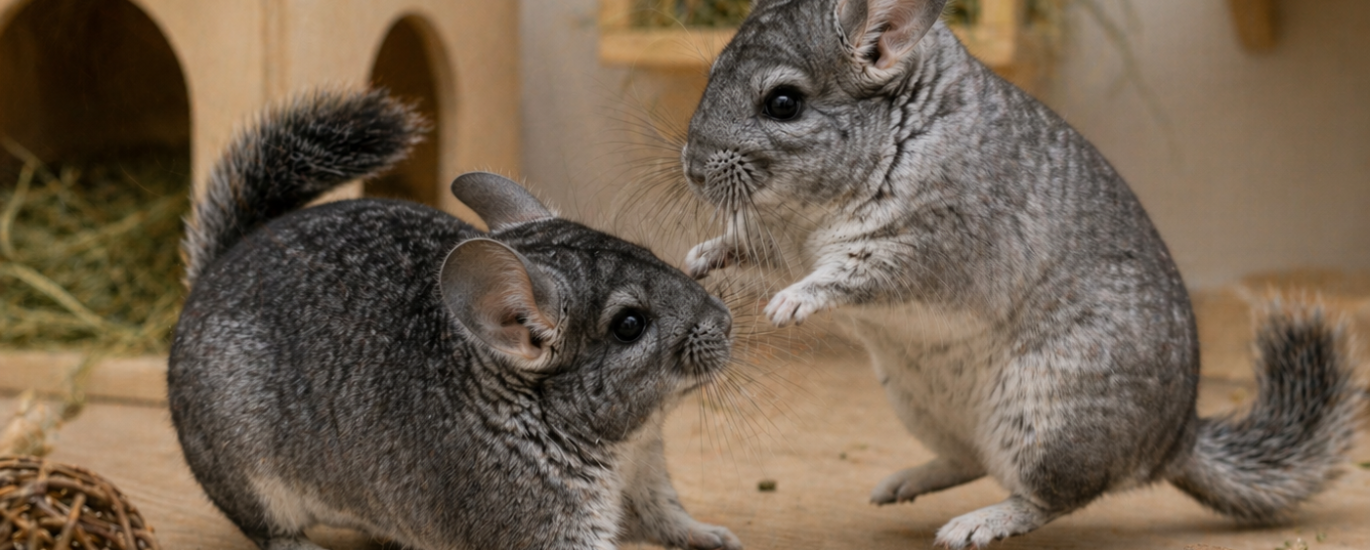
The Latest Owner’s Guide to Chinchillas 2026
Healthy vs unhealthy chinchilla | Diet chart | Cage ideas | Handling guide | Adoption story
1. Is a Chinchilla the Right Pet for You?
Chinchillas make wonderful companions for adults and older children alike, but they demand dedicated long-term care (15–20 years). Before committing, ask yourself: are you ready for daily feeding, cage cleaning, 2+ hours of playtime, dust baths, temperature control (never above 75°F/24°C), and exotic vet visits? They are nocturnal, sensitive to heat, and require a quiet environment. Compared to dogs, they are lower maintenance in some ways (no walks) yet require specialized housing and humidity control. Allergies to chinchilla dust are common — test exposure before adopting.
2. Chinchilla History & Biology
Native to the Andes Mountains (Peru, Bolivia, Chile, Argentina), chinchillas were nearly driven to extinction by the fur trade. By the 1920s, wild populations collapsed. Thanks to M.F. Chapman, who brought 11 chinchillas to the US in 1923, domestic breeding flourished. Today, two main species exist: Chinchilla lanigera (long-tailed, common pet) and Chinchilla brevicaudata (shorter, heavier). Domestic chins retain dense fur (60–80 hairs per follicle), strong hind legs, and keen hearing. Their natural diet consists of tough Andean plants; they live in colonies, making them highly social pets.
3. Adoption vs Buying: Ethical & Cost Factors
Adopting a chinchilla from a rescue gives a second chance to an abandoned animal. Shelters often provide vet-checked, socialized chinchillas at $40–120 USD, compared to breeder prices ranging $150–800+. Reputable breeders offer genetic history, but adoption reduces demand for breeding. Visit our official adoption portal to find chinchillas needing homes. Always ask about health, age, and temperament. Never buy a chinchilla under 4 months old.
4. Housing & Cage Setup
The ideal cage should be wire with 1×2 inch mesh, at least 2 cubic feet per chin, tall (they love climbing). Include solid shelves (untreated pine or hard plastic), a hide box, metal or ceramic food bowl, gravity-fed water bottle, and a solid exercise wheel (14–16″ diameter) — no mesh wheels. Avoid cedar bedding (toxic); use kiln-dried pine or recycled paper. Cage location: cool, draft-free, away from direct sun, not in bedroom (nocturnal noise). Temperature must stay below 75°F; use AC or frozen water bottles in summer. Full housing guide with DIY plans →
5. Nutrition & Optimal Diet
A balanced diet = high-quality chinchilla pellets (18% protein) + unlimited Timothy hay + fresh water daily. Hay provides essential fiber to prevent GI stasis. Treats: extremely limited — one raisin or small dried fruit 3–4 times weekly. Avoid sugary, fatty treats. Sudden diet changes cause diarrhea, which is life-threatening. Chinchilla pellets are longer than rabbit pellets, easier for them to hold. Explore detailed nutrition & safe treat list → Also, white teeth indicate calcium deficiency; yellow-orange teeth are healthy.
6. Grooming & Dust Baths
Chinchillas require dust baths 3–4 times weekly using commercial chinchilla dust (not sand!). Use a bath house for 15min sessions, then remove. Over-bathing dries skin, under-bathing causes greasy fur. Never use water. Dust bathing mimics wild volcanic ash rolling, removes excess oil and prevents matting. Change dust monthly. Allergic to dust? Use cornstarch mix with caution. For ear cleaning, use cotton ball with rubbing alcohol gently — never insert deep.
7. Behavior & Handling
Chinchillas are social, curious, and vocal: they squeak for attention, bark as alarm, and click warning sounds. They are prey animals, so sudden movements scare them. Taming requires patience: sit near cage, speak softly, offer treats (raisin) from palm, then gradually lift. Always support the hindquarters; don’t grab by tail or ears. They need daily out-of-cage exercise in chin-proofed rooms (remove wires, toxic plants, low furniture). Ideal companions: two males from same litter get along best; females can be territorial. Behavior encyclopedia: bonding & body language →
8. Health & Common Ailments
Preventative care: clean cage weekly, fresh water, avoid drafts. Watch for malocclusion (misaligned teeth), heatstroke, diarrhea, respiratory infections, fur biting (stress), ringworm (bald patches), and seizures. Normal temperature: 100–101°F. Signs of illness: lethargy, discharge, weight loss, labored breathing. Always locate an exotic vet before emergencies. Do not give antibiotics without vet approval — they disrupt gut flora. Provide probiotics (acidophilus/yogurt) during antibiotic treatment. Health library: symptoms & first aid →
9. Global Chinchilla Price Guide (2026)
Prices vary drastically by country, color mutation, and source (breeder vs pet store vs rescue). Below are average ranges for standard grey chinchillas (adoption is cheapest). Rare mutations (violet, sapphire, white mosaic) cost 2–5x more.
| Country | Standard grey (USD equiv.) | Adoption fee | Rare color markup |
|---|---|---|---|
| 🇺🇸 United States | $120–450 | $50–100 | $500–1,200+ |
| 🇨🇦 Canada | CAD 160–500 (~$115–360) | CAD 60–120 | CAD 400–900 |
| 🇦🇺 Australia | AUD 180–550 (~$120–370) | AUD 80–150 | AUD 500–1,300 |
| 🇩🇪 Germany | €90–350 (~$100–385) | €40–90 | €300–650 |
| 🇫🇷 France | €100–380 (~$110–420) | €50–80 | €350–700 |
| 🇮🇹 Italy | €80–320 (~$88–350) | €40–70 | €250–600 |
| 🇵🇱 Poland | 200–600 PLN (~$45–135) | 100–250 PLN | 500–1,200 PLN |
| 🇨🇿 Czech Republic | 1,200–4,500 CZK (~$50–185) | 500–1,200 CZK | 3,500–7,000 CZK |
| 🇷🇺 Russia | 2,500–12,000 RUB (~$27–130) | 1,000–3,000 RUB | 8,000–20,000 RUB |
| 🇯🇵 Japan | ¥12,000–55,000 (~$80–360) | ¥5,000–12,000 | ¥40,000–90,000 |
Always factor initial setup ($300–600) and annual recurring costs ($350–700). Adoption through ChinchillaCareHQ Adoption saves lives and money.
10. Senior Chinchilla Care & Saying Goodbye
Chinchillas can live 15–20 years. Senior chins need warmer ambient temperatures, softer cage floors (to prevent bumblefoot), regular dental checks (overgrown teeth common), and easier access to food/water. Weight loss may indicate metabolic changes. Around end-of-life, consider quality of life; euthanasia by an exotic vet may be the kindest option. Grieving is normal — support groups exist. When ready, adopt another chinchilla in need to honor your previous companion.
© 2026 Chinchilla Care HQ — comprehensive, veterinarian-reviewed. Always consult a licensed exotic vet.