If you’ve ever browsed a chinchilla breeder’s website and found yourself scrolling through animals that seem to come in every shade from snow white to jet black, periwinkle blue to warm champagne gold, you may have wondered: how is this possible from a single species? The answer lies in decades of meticulous selective breeding and a fascinating system of dominant and recessive genetic mutations that, when combined, produce over 30 distinct color and coat variations.
This guide covers every recognized chinchilla color mutation — from the ubiquitous standard gray to the extraordinary and rarely seen goldbar — along with the genetics behind each one, what to look for in coat quality, and what color really means (and doesn’t mean) for your pet’s health and personality.
Important: Coat color has no bearing whatsoever on a chinchilla’s temperament, intelligence, or health. A violet chinchilla is not calmer than a black velvet, and a standard gray is not hardier than a sapphire. Color is entirely aesthetic. What matters most is proper nutrition, responsible sourcing, and good daily care — not what shade your chin happens to be.
Understanding Chinchilla Color Genetics
Before diving into individual colors, it’s worth building a foundation in the genetics that make all of this possible. Chinchilla coat color is determined by specific genes inherited from both parents. The key terms to understand are:
Genotype vs. phenotype. The genotype is your chinchilla’s actual genetic code — what genes they carry, including recessive genes that may not be visible. The phenotype is what you actually see: the color and coat pattern. Two chinchillas can look identical (same phenotype) while carrying completely different genetic information (different genotypes). This distinction is critical for breeders and matters to pet owners who want to understand what their chin might produce.
Dominant mutations. A dominant mutation produces a visible change in the coat even when the chinchilla carries only one copy of the mutated gene (heterozygous state). The four dominant color mutations in chinchillas are white, beige, ebony, and velvet (TOV). If you can see it, the gene is there — there are no “carriers” for dominant genes in the traditional sense.
Recessive mutations. A recessive mutation only produces a visible color change when the chinchilla inherits two copies of the mutated gene (homozygous state). A chinchilla carrying just one copy of a recessive gene looks like a standard gray but is a silent carrier — capable of passing the gene to offspring without showing it. The main recessive mutations are violet (African/Sullivan), sapphire, German violet, charcoal, and recessive beige. As the Mutation Chinchilla Breeders Association notes, maintaining accurate records is critical because a recessive gene may be carried for generations without expressing itself until matched with a mate carrying the same gene.
Lethal gene combinations. This is one of the most important concepts for responsible breeding. Two chinchilla mutations — Wilson White and Gunning Black Velvet (TOV) — cannot exist in homozygous form. Embryos that inherit two copies of these genes are not viable and are reabsorbed, resulting in approximately 25% fewer offspring than expected when two carriers are bred together. This is why ethical breeders never breed white-to-white or TOV-to-TOV. Understanding lethal factors before breeding is not optional — it is a baseline responsibility.
Heterozygous vs. homozygous expression. For mutations like beige and ebony, heterozygous animals (one copy of the gene) look different from homozygous animals (two copies). Heterozygous beige animals tend to be darker with deeper ruby eyes, while homozygous beige animals are lighter with pale pink eyes. Ebony follows a similar dose-dependent pattern: more copies of the gene produce darker, richer coloration.
For a deeper technical dive into genetic codes and notation systems used by North American and European breeders, the trochinchillas.nl colour genetics page provides detailed Punnett square tables for most known mutation crosses.
The Standard: What All Other Colors Are Measured Against
Standard Gray (Naturalle)
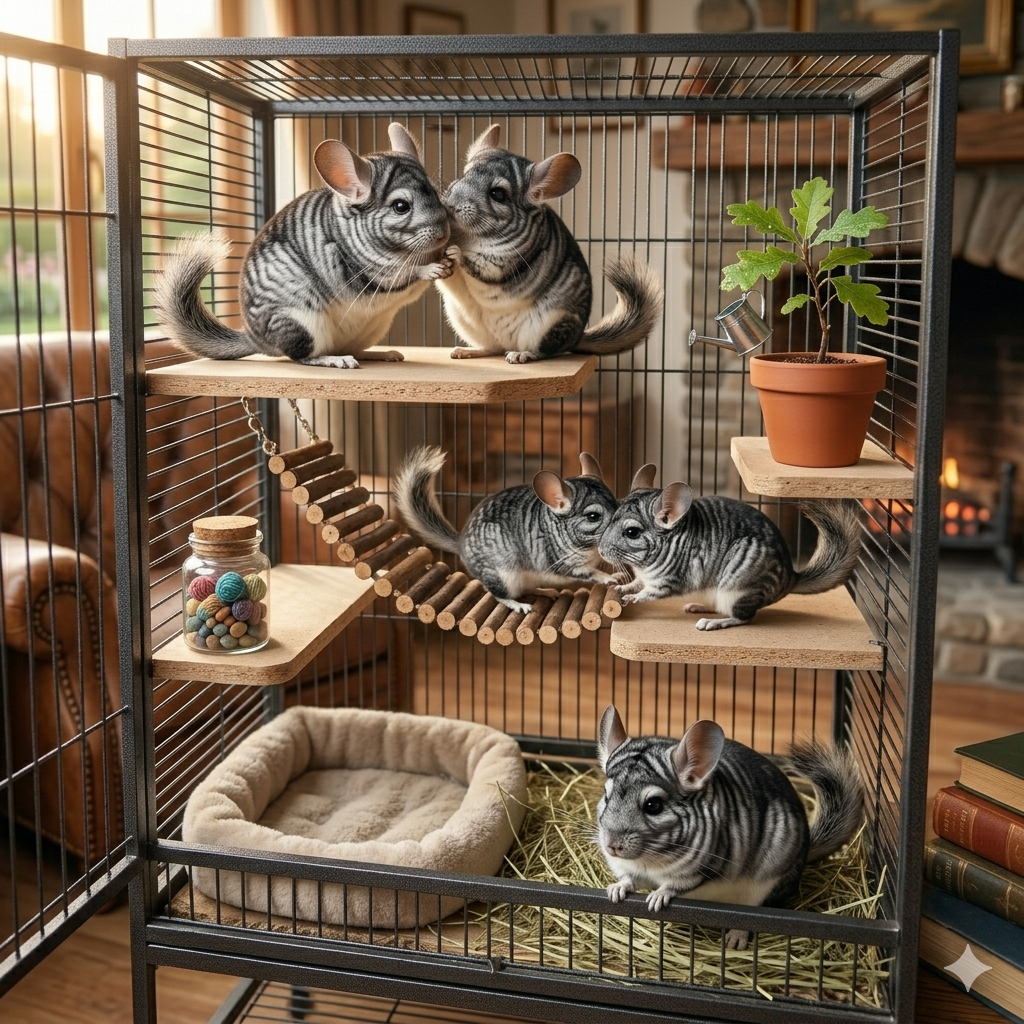
The standard gray — sometimes called “naturalle” in show circles — is the original wild-type coloration of Chinchilla lanigera and the foundation against which all mutations are defined. It is the most common color in both the pet market and breeding programs, and for good reason: exceptional standard grays are the backbone of any strong chinchilla herd.
Appearance: A pearl bluish-gray coat with an agouti hair pattern, meaning each individual hair shaft displays a dark tip, a lighter bar in the middle, and a pale underfur base. The belly is crisp white with a clearly defined belly line. The standard can range from extra light to extra dark, giving six recognized shade variations.
Genetics: The standard is the wild-type — it carries no mutation genes. Any color besides standard gray is, by definition, a mutation.
What to look for in quality: Show judges and experienced breeders evaluate standard grays on the clarity and blueness of the coat — specifically, the absence of red, brown, or yellow undertones. The belly should be pure white with no tinge of gray or cream. Coat density and veiling (how completely the color covers the animal) are equally important. Breeding exceptional standards back into mutation lines every few generations helps maintain fur density without sacrificing size or conformation.
Availability and price: The most affordable chinchilla color, readily available from breeders and rescues. A good starting point for new adopters.
Dominant Color Mutations
White Mutations
The white category is broader than the name implies, encompassing several distinct genetic expressions all related to the Wilson White gene — the very first chinchilla mutation to be documented, developed on the Blythe Wilson Ranch in Redding, California in 1955.
The Wilson White gene is an incomplete dominant, meaning it does not produce complete coverage in every animal. The underlying base color can “bleed through” in variable ways, which is why white chinchillas can appear as predominantly white, as mosaics with patches of color, or as silvery animals with significant gray — all while being genetically Wilson White. As chinchillas.com notes, the Wilson White gene cannot exist in the homozygous form; two copies are lethal. Never breed two white chinchillas together.
The main white variations include:
Wilson White: A predominantly white animal with dark (black) eyes and dark ears. Minimal to no markings. The most commonly seen white variant in pet chinchillas. A useful identifier: some portion of the tail will always be white in any animal carrying the Wilson White gene — from the full tail to just the very tip — making it possible to visually confirm white gene presence even in lightly marked animals.
Mosaic: Produced when a white gene carrier is bred with a standard or other color. Mosaic patterns are entirely random — no two mosaic chinchillas are identical, which makes each animal genuinely one-of-a-kind. Highly marked mosaics with strong color contrast are called “extreme mosaics.” Animals with minimal markings and an even light gray tone across the top are often called “silvers” — though silver is a pattern description, not a separate mutation.
Pink White: A three-gene combination of standard, Wilson White, and Tower Beige. These animals appear white but with pink ears, red eyes, and occasional beige-toned freckles. Some are pure white; others show faint beige markings.
Albino: True albino chinchillas — white with red or pink eyes, caused by a complete absence of melanin — are rare and distinct from the Wilson White-based whites. Genuine albinos are the product of two different genetic pathways than the Wilson White line.
Common quality flaws to avoid: White chinchillas bred without attention to conformation can develop “cottony” or kinky fur texture, yellowish or cream-colored coats, and soft, loose fur that does not stand on its own. Quality whites should be large and blocky with smooth, dense fur and clear, bright white coloration.
Beige Mutations
Beige chinchillas display warm champagne tones ranging from pale cream to rich honey-gold. All beige chinchillas have a white belly and, crucially, red or ruby eyes — the red eyes of a beige chinchilla are caused by the Tower Beige gene and are not an indication of albinism.
The Tower Beige gene is the only true dominant chinchilla color mutation that can exist in the homozygous form without lethality — making beige unique among the dominant mutations. Every chinchilla carrying the Tower Beige gene, whether heterozygous or homozygous, will have red eyes.
Heterozygous beige: One copy of the Tower Beige gene produces a warmer, darker champagne tone with deep ruby eyes. Show classifications include Extra Light, Light, Medium, Dark, and Extra Dark beige.
Homozygous beige: Two copies of the Tower Beige gene produce a lighter, more even, finely textured coat with very pale pink or near-white eyes. The coat quality of homozygous beige is noticeably different — finer and lighter — than the heterozygous version.
Beige-based combinations: When beige is crossed with ebony, the result is a “Pastel” or “Tan” — a warm brown animal with beige agouti patterning. Crossed with TOV (velvet), beige produces the “Brown Velvet” or “TOV Beige,” one of the most popular pet colors due to its rich, warm appearance. Show breeders sometimes call these simply “TOVs.”
Quality note: In recent years, breeding beige animals to very dark standard grays has caused many beige lines to lose the clear lavender or champagne hue that is desirable, producing muddier tones. Breeding back to high-quality light standards maintains coat clarity.
Ebony and Charcoal
The ebony mutation is one of the most complex in chinchilla genetics because it is dose-dependent: the more copies of the ebony gene an animal carries, the darker and more saturated its color becomes.
Appearance: Ebony chinchillas range from a chinchilla that looks almost like a dark standard (light ebony, heterozygous) to an animal with shiny, jet-black fur on every part of its body — including the belly, which is gray to black rather than the white belly seen on most other mutations. This “wrap-around” belly coloration (where the body color extends to the underside) is the defining visual signature of the ebony gene.
Show classifications: Light, Medium, Dark, and Extra Dark ebony are the recognized show categories. Ebonies are judged for clarity of color (a clear blue hue in the fur is preferred over reddish or oxidized tones), fur density, and fullness of belly wrap.
Quality flaws: Common ebony flaws include reddish or oxidized fur, loose or poor-density coats, and incomplete belly coloration in lighter specimens. The best ebonies are large and blocky, with dense fur that bounces back when disturbed and a clear, unwashed blue-black tone.
Genetics note: Several lines of ebony-linked genetics exist, including the Tasco, Busse, French Blue, Lester Black Recessive, Treadwell Black, and Brouke Recessive Charcoal. These subtle variants are primarily of interest to advanced breeders.
Black Velvet (TOV — Touch of Velvet)
The Black Velvet is consistently one of the most visually dramatic and sought-after chinchilla colors, and it is actually more accurately described as a pattern modifier than a standalone color. The TOV (Touch of Velvet) gene overlays a dark, saturated “veiling” over the top of whatever base color it is combined with.
Appearance as Black Velvet (TOV + Standard): A deep, stark black covering the face, back, spine, and sides, transitioning sharply to a bright white belly. The contrast is more extreme than any other mutation. A characteristic “mask” of black often gives Black Velvet chinchillas a dramatic facial appearance.
TOV combinations with other colors:
- TOV + Beige = Brown Velvet (warm chocolate-brown back, white belly)
- TOV + White = TOV Mosaic (dark veiling over a white-patterned animal)
- TOV + Violet = sometimes called “Ultra-Violet” by hobbyists, though show breeders prefer “TOV Violet”
- TOV + Ebony = produces extremely dark animals with reduced belly contrast
Lethal factor: The Gunning Black Velvet (TOV) gene cannot exist in the homozygous form. Two copies are lethal. Never breed TOV-to-TOV. Pregnancies from such pairings produce approximately 25% fewer offspring than expected due to embryo reabsorption.
Common flaws: “Dirty” bellies (off-white rather than bright white), breaks in veiling around the neck area (“halos”), and reddish discoloration in the dark fur. Quality Black Velvets should have complete, unbroken veiling from face to tail base and a stark, pure white belly.
Recessive Color Mutations
Sapphire
The sapphire is one of the most visually distinctive and rarest chinchilla colors in the pet market, and also one of the most difficult to breed for. It produces a cool, gunmetal periwinkle blue tone unlike anything else in the chinchilla color palette.
Appearance: A rich, vivid gunmetal blue coat with a clear white belly, dark (black) eyes, and pinkish-gray ears. The color has been described as similar to a Russian Blue cat. Sapphires can sometimes be confused with very blue-toned standard grays by inexperienced buyers — genetic confirmation from a knowledgeable breeder is recommended.
Genetics: Sapphire is a recessive mutation. Both parents must carry the sapphire gene (one copy each, as carriers) for sapphire offspring to be produced. A standard-looking chinchilla that carries one copy of the sapphire gene (a carrier) looks completely normal — the gene is invisible in the heterozygous state.
Rare combinations: Sapphire combined with violet produces the “Blue Diamond” — an extremely rare double recessive that results in a particularly vivid periwinkle coloration. The combination of Larsen sapphire, Sullivan violet, and German violet genetics can create a triple diamond, which is probably one of the most difficult colors to breed for. Some blue diamonds in the US may in fact be triple diamonds — the distinction is difficult to determine without full genetic history of the parents.
Violet Mutations
Violet chinchillas are prized for their soft, lavender-gray coloration — one of the most beautiful and most frequently requested mutations among pet owners. However, “violet” is not a single gene: there are actually several distinct violet mutations, genetically separate from one another, which produce similar-looking animals through different genetic pathways.
Sullivan Violet: The most common violet mutation in the US. A recessive gene producing a soft, cool lavender-gray body with darker gray-blue shading on the face, feet, and tail, and a bright white belly. Both parents must carry the gene to produce violet offspring.
German Violet: Originally bred in the 1970s and 80s, not officially recognized as a distinct mutation until later, the German violet was first bred by Rolf Haupt of Frankfurt, Germany. It is darker in coloring with a more chocolate-hued gray compared to the Sullivan violet, and is more commonly bred in Europe. The German violet and Sullivan violet are genetically distinct — they can be combined to produce a “double violet,” an animal carrying both recessive genes.
African Violet: A third distinct violet mutation, also recessive, which produces similar visual results to the Sullivan violet. The genetic distinction matters in breeding programs, as two animals that look like violets may not carry the same gene.
Solid Violet: Produced when a violet chinchilla also carries the ebony “wrap-around” gene. The result is a dark violet color that extends to the belly rather than the standard white belly.
Recessive Beige
Distinct from the dominant Tower Beige, recessive beige is a separate mutation that produces a similarly warm but generally lighter champagne coloration. Animals carrying one copy of the recessive beige gene appear as standard gray carriers — the color is only visible when two copies are present. The presence of red eyes distinguishes beige chinchillas of both genetic types.
Fur Structure Mutations
Beyond color, chinchilla breeders have also developed mutations that affect the structure and length of the fur rather than its pigmentation. These are among the rarest and most expensive chinchillas available.
Angora (Royal Persian Angora)
Angora is a long-hair mutation. A normal chinchilla has hair that is ¾ to 1.5 inches in length, while an angora can have fur 1.75 to 3+ inches in length. First recorded in 1964 by a Canadian breeder, angoras were only available overseas for many years and have only recently become more available to US breeders.
The angora mutation is believed to be a simple recessive gene that also functions cumulatively — the more angora genes in recent ancestry, the longer the potential hair growth. Some angoras develop impressive manes, ear tufts, and foot feathering. Since the angora trait affects only fur length and not pigmentation, angoras can appear in every color mutation. Prices for angora chinchillas typically start around $1,500 and can reach $5,000 for exceptional show-quality specimens. Their long coats require additional grooming attention compared to standard chinchillas.
Locken (Curly)
The first curly chinchillas were noted in 1963 as the Sakrison mutation. The name “locken” was chosen in 2010 when a batch of curly chinchillas was imported to the US from Germany to diversify the small gene pool.
Locken chinchillas have a distinctive curly or wavy coat that is unlike any other small pet mammal. The curly fur gene has proven to be ebony-linked — a chinchilla must express some degree of ebony in its genotype in order to also express the locken curl in the phenotype. This means locken chinchillas always carry some ebony genetics, and breeding two lockens together produces increasingly curly offspring in subsequent generations. Even a violet locken — violet coloring combined with the curly gene and ebony linkage — occasionally appears. Locken chinchillas can cost up to $3,000 due to their extreme rarity.
Royal Imperial Angora
In March 2017, the first Locken/Royal Persian Angora hybrid was offered at auction and named the Royal Imperial Angora. This crosses the long-fur trait with the curly trait, producing a chinchilla with both elongated and wavy fur. Extraordinarily rare, these animals represent the frontier of chinchilla coat mutation breeding.
Rare and Specialty Colors
Goldbar
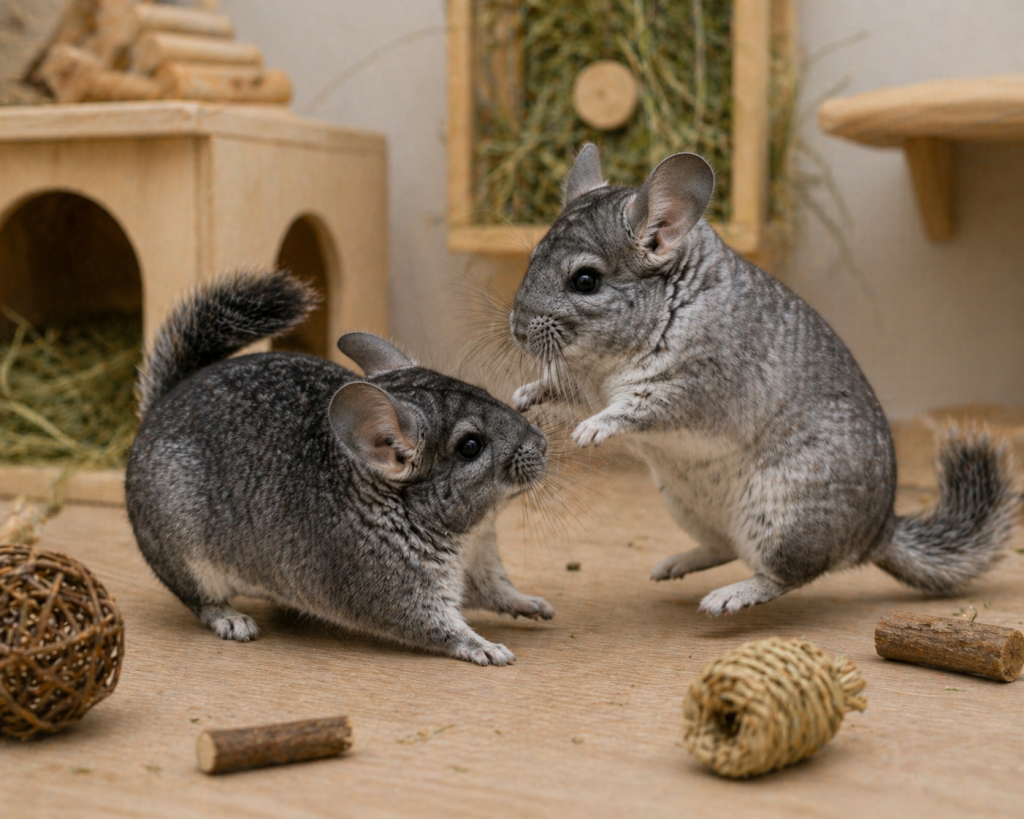
The goldbar is considered the rarest color mutation of chinchilla. Gold bar chinchillas were first bred in 1995. They display a light champagne or gold-hued coat with a white belly, red eyes, and pink ears. A defining feature is a golden-hued darker bar running along the animal’s back — hence the name. The goldbar is a recessive mutation requiring both parents to be carriers.
The first American goldbar appeared first, followed by a Canadian version born in 2002 to Robert Lowe’s herd in Enderby, BC. Eventually breeders crossed both lines, proving they are the same mutation. Most breeders differentiate between the Canadian LRW (lighter golden hue) and the American goldbar (more yellow-golden hue) to preserve the unique qualities of each line. In some show circuits, this color is referred to as “champagne.”
Tan / Pastel
A Tan or Pastel is the result of crossing a beige with an ebony — the two names refer to the same genetic combination. The result is a warm, brown-toned animal that blends the agouti patterning of the beige with the darker, wrap-around tones of the ebony gene. Shade can range from light tan to deep chocolate brown.
Blue Diamond and Triple Diamond
The Blue Diamond is the double recessive produced by combining sapphire and violet genetics, resulting in a vivid periwinkle-blue coloration even more saturated than either parent mutation alone. The Triple Diamond incorporates a third recessive (typically German violet alongside Larsen sapphire and Sullivan violet) and is among the rarest colorations in existence. Genetic verification is the only reliable way to confirm these multi-recessive combinations.
California Fading White
The California fading white (also called California white tail) is a fur modifier that causes progressive pigment loss as the animal ages. It can occur in any mutation, though it is most commonly seen in standards, violets, and ebonies. Animals typically begin showing the characteristic fading — appearing first around the nose, eyes, and front legs — at around seven years of age.
Multi-Gene Combinations: The Expanding Color Palette
One reason chinchilla color genetics has become so complex is that virtually any color mutation can be combined with any other, producing combinations that multiply the visual possibilities exponentially. The MCBA’s recognized mutation list provides a framework, but breeders are continually developing new combinations that fall outside established categories.
Some established multi-gene combinations worth knowing:
| Combination | Common Name | Visual Result |
|---|---|---|
| TOV + Standard | Black Velvet | Black back, white belly, dark mask |
| TOV + Beige | Brown Velvet | Chocolate-brown back, white belly |
| TOV + White | TOV Mosaic | Dark veiling over mosaic pattern |
| TOV + Violet | Violet Velvet | Lavender back with velvet pattern |
| Beige + Ebony | Tan / Pastel | Warm brown, wrap-around belly |
| White + Beige | Pink White | White coat, pink ears, red eyes |
| Violet + Sapphire | Blue Diamond | Deep periwinkle, double recessive |
| Violet + Ebony | Solid Violet | Wrap-around violet, no white belly |
| Beige + White + Ebony | Tan White | White with tan markings, ebony wrap |
Color and Coat Quality: What Judges and Breeders Evaluate
Whether you’re interested in showing or simply want the best-quality animal, understanding what “quality” means in coat evaluation helps you assess chinchillas more knowledgeably.
Clarity refers to how pure and vivid the coat color is — free from unwanted tones. A standard gray with hints of red or brown is penalized; a sapphire with dull or washed-out color scores poorly. Clarity is the single most important color criterion in show judging.
Veiling describes how completely the chinchilla’s primary color covers the animal. In Black Velvet chinchillas, complete veiling from the face down the back without breaks or “halos” at the neck is essential. In standard grays, the gradual fade from darker back to white belly should be smooth and defined.
Density is the plushness and thickness of the fur. Chinchilla fur that bounces back when touched and stands on its own is preferred over soft, loose, or “cottony” fur. Dense fur is a quality indicator across all color mutations.
Wrap-around specifically refers to whether and how completely the belly matches the back color — relevant primarily for ebony, solid violet, and similar mutations. A clean, even wrap is preferred over a patchy or incomplete one.
For full grooming guidance relevant to maintaining coat quality, see our chinchilla grooming guide.
Does Color Affect Health or Temperament?
The short answer is no — with one important partial exception.
Temperament: Color has no demonstrated link to personality. A violet chinchilla is not more gentle than a black velvet. A standard gray is not more resilient than a sapphire. Individual personality is shaped by genetics (related to the individual animal, not its color gene), early socialization, and care quality. See our full health guide for factors that actually affect your chinchilla’s wellbeing.
Health: Most color mutations have no known health consequences. The partial exception involves the lethal gene combinations (Wilson White and TOV): animals produced from ill-advised same-mutation pairings suffer from reduced litter sizes due to embryo loss, which is an ethical and welfare concern at the breeding level but does not affect the health of living animals carrying one copy of these genes.
Some breeders have anecdotally noted that very light-colored and albino chinchillas may have slightly increased sensitivity to bright light, but this is not well-documented as a clinical concern at normal household light levels.
Choosing a Chinchilla by Color: Practical Advice
A few honest guidelines for prospective owners navigating the color landscape:
Rarity drives price, not value as a pet. A goldbar chinchilla at $850+ is no more rewarding a companion than a standard gray at $50–150. If budget is a consideration, a standard or common mutation gives you every bit as wonderful a pet.
Be skeptical of unverified rare colors. When a breeder claims to have sapphires, violets, or goldbars, ask to see the genetic records of the parents. Without documentation of both parents’ genetics, “violet” could be a blue-toned standard, and “sapphire” could be a misidentification. Reputable breeders maintain detailed pedigree records.
Lethal gene carriers need informed owners. If you adopt a Wilson White or TOV chinchilla and ever intend to breed, you must understand the lethal factor implications. This isn’t a concern for pet-only owners, but it becomes a serious responsibility if breeding is on the table.
Coat quality matters more than color for long-term satisfaction. A chinchilla with mediocre fur from a high-profile color mutation is less appealing over time than a chinchilla with an exceptional, dense, plush coat in a common color. When visiting breeders, feel the fur — not just observe the color.
For guidance on finding a reputable source for any color, visit our chinchilla adoption guide. And once you’ve chosen your chin, our nutrition guide and complete care resources will help you give them the best possible life regardless of what color they happen to be.
Quick Reference: Chinchilla Colors at a Glance
| Color | Genetics | Rarity | Eye Color | Belly Color | Notes |
|---|---|---|---|---|---|
| Standard Gray | Wild-type | Very common | Black | White | Foundation of all breeding lines |
| Wilson White / Mosaic | Dominant (lethal homo) | Common | Black | White | Never breed white × white |
| Pink White | White + Beige | Common | Red/Pink | White | Three-gene combination |
| Albino | Recessive (separate from Wilson White) | Rare | Red/Pink | White | True melanin absence |
| Beige (Hetero) | Dominant | Common | Ruby | White | Darker, warmer champagne |
| Beige (Homo) | Dominant (2 copies) | Uncommon | Pale Pink | White | Lighter, finer coat |
| Tan / Pastel | Beige + Ebony | Uncommon | Ruby | Gray/Tan | Warm brown tones |
| Ebony (Light–Extra Dark) | Dominant (dose-dependent) | Common–Uncommon | Black | Gray–Black | Wrap-around belly |
| Black Velvet (TOV) | Dominant (lethal homo) | Common | Black | White | Never breed TOV × TOV |
| Brown Velvet | TOV + Beige | Common | Ruby | White | Also called “TOV Beige” |
| Sapphire | Recessive | Rare | Black | White | Cool gunmetal blue |
| Sullivan Violet | Recessive | Uncommon | Black | White | Soft lavender-gray |
| German Violet | Recessive (distinct gene) | Rare | Black | White | Darker, chocolate-gray hue |
| Blue Diamond | Sapphire + Violet | Very Rare | Black | White | Double recessive |
| Goldbar | Recessive | Very Rare | Red | White | Gold bar along spine |
| Angora | Recessive (cumulative) | Very Rare | Varies | Varies | Long fur; any color possible |
| Locken (Curly) | Ebony-linked | Extremely Rare | Varies | Gray–Black | Curly/wavy fur texture |
| Royal Imperial Angora | Locken + Angora | Extraordinarily Rare | Varies | Varies | Long and curly fur |
Further Reading and Resources
For authoritative genetics information and breeding standards:
- Mutation Chinchilla Breeders Association — Genetics
- Chinchillas.com — Recognized Color Mutations
- Sunshine Chinchillas — Color Mutation Guide
- TroChinchillas — Colour Genetics and Punnett Squares
- European Proceedings — Genetic Symbols for Chinchilla Mutations
For everything else your chinchilla needs:
- Chinchilla Types and Subspecies
- Chinchilla Nutrition Guide
- Chinchilla Health and Veterinary Care
- Chinchilla Grooming Guide
- Adopting a Chinchilla
This article is for informational purposes only and does not constitute veterinary or breeding advice. Genetics information is based on current understanding within the chinchilla breeding community and may evolve as research progresses. Always consult a qualified exotic animal veterinarian for health-related concerns.