

Introduction: Are Chinchillas the Right Pet for You?
Chinchillas are no longer just a source for fur or laboratory subjects; they have become increasingly popular as exotic pets in the UK and beyond. With their dense, luxurious coats, large ears, and curious whiskers, they are undeniably charming. However, beneath that cute exterior lies a complex creature with specific physiological and psychological needs.
Key Takeaway: Unlike hamsters or guinea pigs, chinchillas are a long-term, high-maintenance commitment. In captivity, they can live up to 20 years—longer than many dogs . They are crepuscular (active at dawn and dusk) and require a specialized environment to thrive.
“Chinchillas are not cheap pets… Chinchillas live a long time up to 20 years!” — Chinchilla Factsheet
The Natural History (Origins)
Understanding wild behavior is the key to preventing pet issues. Chinchillas originate from the arid, barren Andes Mountains in Chile. Two species exist: Chinchilla lanigera (long-tailed, common pet) and Chinchilla brevicaudata (short-tailed, rare). Wild populations were decimated by fur hunting in the 19th century, leading to their status as Threatened on the IUCN Red List and inclusion in CITES Appendix I.
Every domestic chinchilla today is descended from just 12 wild individuals captured in 1923 .
Wild Adaptations
- Hydration: They rarely drink standing water in the wild, obtaining fluids solely from cacti and succulents.
- Teeth: They have open-rooted (continuously growing) teeth to survive on abrasive, fibrous plants.
- Thermoregulation: Their dense fur (50-75 hairs per follicle) protects against cold, but makes them extremely vulnerable to heat over 25°C .
Housing & Environment
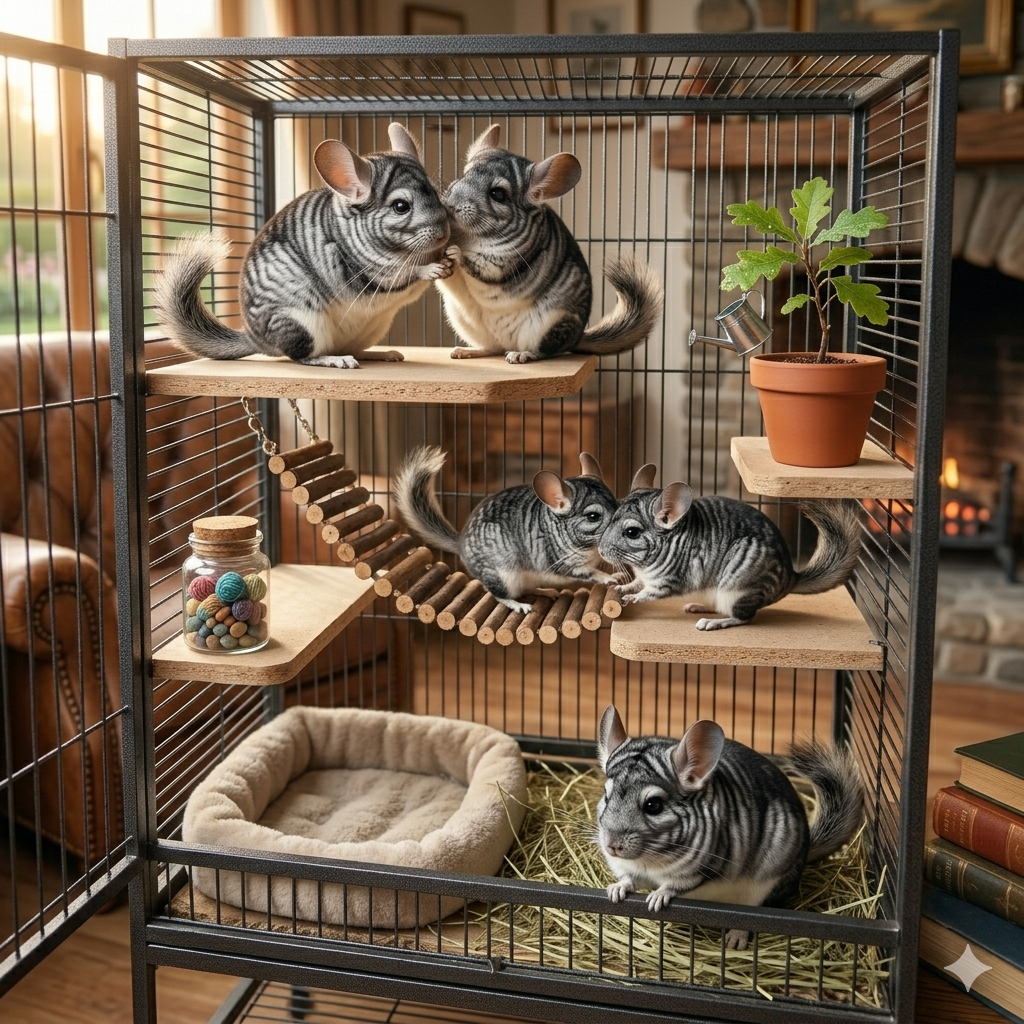
Providing the correct environment is the most debated aspect of chinchilla care. While old-school farming used small cages, modern welfare science has shifted drastically.
The Cage Size Debate (2026 Update)
While pet owners are encouraged to buy the largest cage possible, a 2024 study on chinchilla preferences revealed a fascinating nuance: chinchillas showed a statistical preference for smaller, more enclosed spaces (0.25m²) over larger, open ones (p < 0.001), primarily because they “feel safer” from aerial predators .
However, a 2023 study in Scientific Reports clarified that enriched cages (with deep litter and platforms) reduced “fearfulness” and encouraged natural locomotion compared to barren standard cages .
The Verdict: Your cage should be wide and tall (minimum 0.5m width x 0.6m height) and cluttered with hides.
Specific Requirements
- Flooring: Avoid wire floors. They cause pododermatitis (blisters on feet). A solid floor with paper bedding (or kiln-dried pine) is best .
- Security: Because they are prey animals, the cage should be raised off the floor. Avoid overhead fans (simulates owl shadows).
- Temperature: Critical! Never exceed 25°C (77°F). High humidity and heat cause fatal heat stroke. Keep them in a cool basement or air-conditioned room.
The Optimal Diet
Dietary mistakes are the leading cause of premature death in chinchillas.
The Rule of 80/20
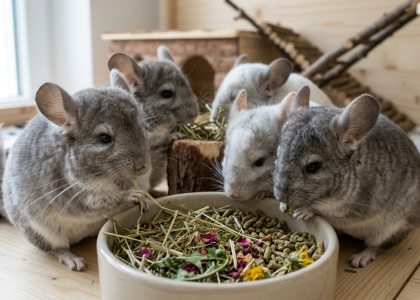
- 80% Hay (Unlimited): Timothy hay is the gold standard. It grinds down their molars and provides the long-strand fiber needed for gut motility. Avoid Alfalfa hay as a staple due to high calcium, which causes bladder stones .
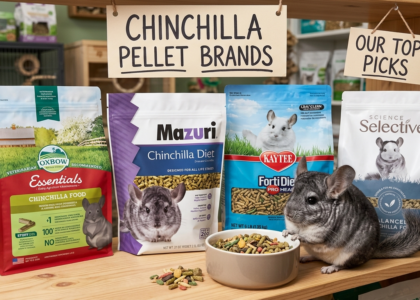
- 20% Pellets: Feed 1-2 tablespoons of plain, high-fiber pellets daily.
- Treats (<10%): Chinchillas have sensitive guts. Safe treats include a slice of fresh apple, dried rose hips, or a single raisin. Never feed seeds, nuts, or fresh leafy vegetables (like cabbage or iceberg lettuce) as these cause bloat.
Why “Muesli” Diets are Dangerous
The Factsheet warns against “selective feeding” in muesli mixes. Chinchillas will pick out the sugary fruits and seeds (like sunflower seeds) and leave the fiber pellets. This leads to obesity, diarrhea, and dental malocclusion (spurs growing into the cheek).
“Muesli foods are very soft so do not provide enough dental wear, leading to overgrown and misaligned teeth.” — Chinchilla Factsheet
Behavior & Socialization
Social Needs
In the wild, they live in colonies of over 100. Chinchillas should never be kept completely alone. Keep them in same-sex pairs (littermates preferred) or groups to prevent loneliness, which manifests as depression or lethargy .
Understanding Posture
- Inquisitive: Standing on hind legs (scanning for danger).
- Threatened: “Fur-slip” (shedding patches of fur to escape a predator) or urine spraying (common in females).
- Happy: Soft “contact calls” and gentle nibbling (exploring).
Handling Training
Chinchillas generally dislike being grabbed (predator instinct). Train them using the “arm walking” method:
- Offer a treat on your flat palm.
- Slowly move the treat up your forearm so they must climb onto you.
- Support their hind legs. Never scruff or hold tightly.
Dust Bathing (Non-Negotiable)
Chinchillas have such dense fur that water baths are dangerous (fur molds and doesn’t dry, causing hypothermia). Instead, they need Volcanic Ash Dust.
- Schedule: Provide a bath for 10-15 minutes daily . Remove the bath immediately after to prevent dry skin and eye irritation.
- The Routine: You will observe a three-phase ritual: Paw-digging → Cheek rubbing → Rolling (spinning). This is a natural behavioral need, not just grooming.
Common Health & Behavior Problems

1. Fur Chewing
This is the most common behavioral disorder, where the chinchilla chews its own fur (usually on the flanks) down to the undercoat.
- The Science: It is not just a “habit.” A 2012 study found that female chinchillas displaying severe fur-chewing had significantly elevated urinary cortisol levels (stress hormone) .
- Causes: Boredom (small cage), lack of a nest box, or high ambient temperatures.
- Prevention: Larger, enriched cages and a consistent routine.
2. Malocclusion (Dental Disease)
Because their teeth grow continuously, a lack of hay or a genetic disposition leads to spurs growing into the tongue or cheek. Signs: Drooling (“slobbers”), weight loss, pawing at the mouth.
3. Heat Stroke
A “silent killer.” If a chinchilla is lying flat, lethargic, with red ears, it is overheating. Immediate cooling (not ice) and a vet visit are required.
Summary Checklist for Potential Owners
Before buying, ask yourself these questions based on the factsheet:
- Lifespan: Can you commit to 15-20 years?
- Climate: Can you keep a room below 22°C in summer?
- Destruction: Are you okay with them chewing your skirting boards and wallpaper (if allowed to run free)?
- Mess: They produce thousands of dry, hard pellets daily that scatter everywhere, plus sand and hay.
Chinchillas are not recommended for young children. They are too fast, fragile, and nocturnal to be cuddled.
References
- Spotorno, A. E., et al. (2004). Chinchilla laniger. Mammalian Species. (Source material).
- Ponzio, M. F., et al. (2023). A survey assessment of the incidence of fur-chewing… Cambridge Core .
- Szendrő, Z., et al. (2024). Study on Adult Chinchilla Preferences for Cages… MDPI .
- Merck Veterinary Manual. Providing a Home for a Chinchilla. (Reviewed Sept 2025) .
- Merck Veterinary Manual. Diet for a Chinchilla. (Reviewed Sept 2025) .
- Hong Kong Agriculture, Fisheries and Conservation Department. Chinchillas – Proper Care .